How Did You Get There? Patrick Stokes
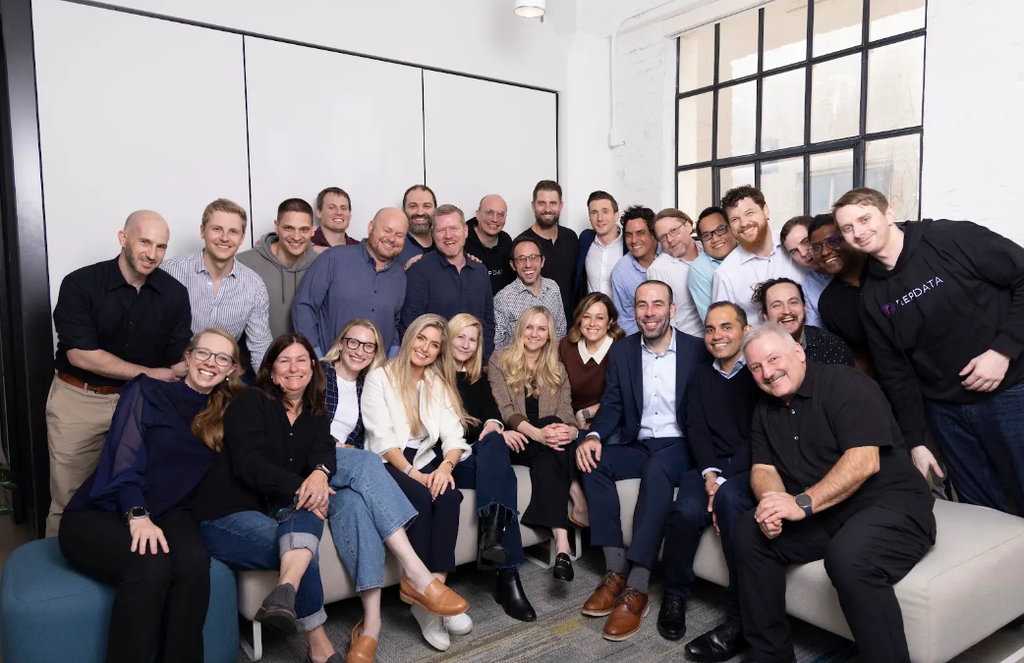
From starting out in a bid support role at e-Rewards to leading sales at Lucid and ultimately founding Rep Data, Patrick Stokes has spent more than 20 years at the forefront of the research industry’s growth and technological transformation.
With a passion for sales, entrepreneurship and building businesses, Patrick has helped grow some of the industry’s most successful companies. Today, as Founder and CEO of Rep Data, he’s focused on tackling one of research’s biggest challenges: improving data quality while using technology to make research faster, smarter and more efficient.
In this edition of How Did You Get There?, Patrick reflects on the decisions that shaped his career, why periods of slowing growth prompted some of his biggest moves, and the mentors who helped him develop from salesperson to business leader. He also shares why a growth mindset, creativity and adaptability are essential for the next generation, and how AI could help eliminate the friction between question and answer.
Every career has a beginning. Looking back, what first drew you into the world of research, insights, data or analytics, and what were the key moments that shaped the journey to where you are today?
Like many others in our industry, I didn’t grow up thinking about market research as a career. I always wanted to be in sales or in a client-facing role, and that’s always been my passion.
When I started out, I had a marketing professor at TCU who knew about this fast-growing company in Dallas called e-Rewards. He connected me with Kurt Knapton, and Kurt pitched me on the growth they were experiencing, so I decided to take a job there. They put me in a bid support role, where almost every quote and RFP made it across my desk. I became the go-to internal partner for the sales team, and that’s really how I learned the industry. I saw all different types of projects and clients, from management consultancies and brands to universities and market research agencies.
That role gave me an incredible education in the industry at a young age. I learned our product inside and out, worked across all the different buyer types and developed a really strong understanding of what was possible with market research. I used that expertise and the confidence I had built to move into sales with my own quota. I started from scratch a year after joining e-Rewards, with no revenue and no relationships, and eventually became one of the company’s top sellers.
Most successful careers include a few pivotal decisions or turning points. Which moments changed the trajectory of yours, and why?
One of the first was deciding not to go into my family business. My family runs a wealth management firm, and I had an offer to become a financial advisor at Fidelity for a couple of years and then effectively become part of the family business. I declined because I wanted to create my own path.
Another big turning point came in 2014, when I left e-Rewards/Research Now and went to Federated Sample/Lucid to lead the sales team. I wasn’t an individual contributor anymore. I was moving from being a seller into sales leadership, but I was also moving from an incumbent to a startup, disruptor and technology-first company.
One of my passions has always been growth, especially revenue growth, and that has influenced a lot of the decisions I’ve made throughout my career. I’ve been fortunate to be part of significant growth at e-Rewards/Research Now, Federated Sample/Lucid, and now Rep Data. I’m drawn to opportunities where there’s something to build and room to grow. Everything with me is growth!

Careers rarely follow a straight line. Can you share a setback, failure or particularly difficult period or challenge that taught you something important and still influences how you lead today?
A challenge in our industry is keeping up with the pace of change. In 2014, the market had matured considerably and growth had started to slow. I could feel the industry evolving, and I knew I had to change with it. I left Research Now to join Federated Sample, which allowed me to move into a younger, technology-first company at a different stage of growth.
The pandemic brought another period when growth slowed significantly. That became another catalyst for change, and I left Lucid to start Rep Data.
Those were probably the two biggest inflection points in my career. In both cases, a slowdown in growth ultimately led me to make a different move.
What has kept you in this industry? After all these years, what still excites, challenges or motivates you to come back each day?
What has kept me here is the customer relationships, working with good people and getting to solve real problems, especially around data quality. You can build really long-term friendships and partnerships in this industry, and that’s been a big part of it for me.
It’s also a super fast-paced industry. New problems pop up every day, new opportunities pop up every day, and the industry continues to improve and grow. The challenge of solving new problems also keeps our work interesting.
Thinking back to your first five years in the profession, what do you know now that you wish you’d known then?
I wish I’d known just how fast the market would evolve with technology. When I started, we were still converting phone surveys to panel surveys. I got to Federated Sample/Lucid when the company was already five years old, so I wish I’d been even earlier to the ResTech transformation.
If you were mentoring someone entering the industry today, what are the two or three qualities, behaviors or mindsets you would encourage them to develop above all others?
You have to have a growth mindset. You have to be creative enough to solve challenges that don’t have easy answers, and you need to be adaptable and find your own way. Research is not a 9-to-5 job. Sample doesn’t sleep. Research is constant, client needs are constant, and you have to be willing to get into the trenches of a really fast-paced industry with a lot of complex challenges.
There’s a lot of art in what we do. You can’t just give someone a playbook and say, “Here’s what you should do.” I like creative self-starters who can operate in a fast-paced world, add their own personal value and effectively build their own business inside of Rep Data.
No one succeeds alone. Who has had a meaningful impact on your career that you’d like to thank, acknowledge or shine a light on, and what did they teach you?
I’ve had a lot of people influence me throughout my career, but a few of the main ones stand out: Kurt Knapton taught me how to be a professional, and Patrick Comer and Andy Ellis taught me how to be a leader.
My dad has been another major influence and a mentor from a business standpoint. He’s an entrepreneur, and my brothers took over his business, so entrepreneurship and building businesses have always been part of my family. There’s a competitive element there, too. I want to beat my brothers!
Looking ahead, what advice would you give to our industry? What needs to change, improve or evolve if we are to remain relevant, influential and impactful in the years ahead?
We have a once-in-a-lifetime opportunity with technology and AI to create efficiencies, speed things up and end friction. Our new mission statement at Rep Data is to “end the friction between question and answer,” and I think that speaks directly to where the industry needs to go.
A lot of the friction comes from resisting the evolution of research. Some researchers are buying sample the same way they did 20 years ago or programming and analyzing surveys with processes that are slow or outdated. We need the industry to adopt AI, not necessarily for synthetic data or things like that, but to maintain the rigor of research while reducing manual tasks and friction points that take up time, slow down delivery and cause delays.
Brands are constantly tasked with doing more with less. They have less budget, more research to do and fewer people to get it done. If we’re going to keep up, we need to build game-changing technology that speeds up the time it takes to design, field and report on high-quality research.