How did you get there? Jane Frost CBE
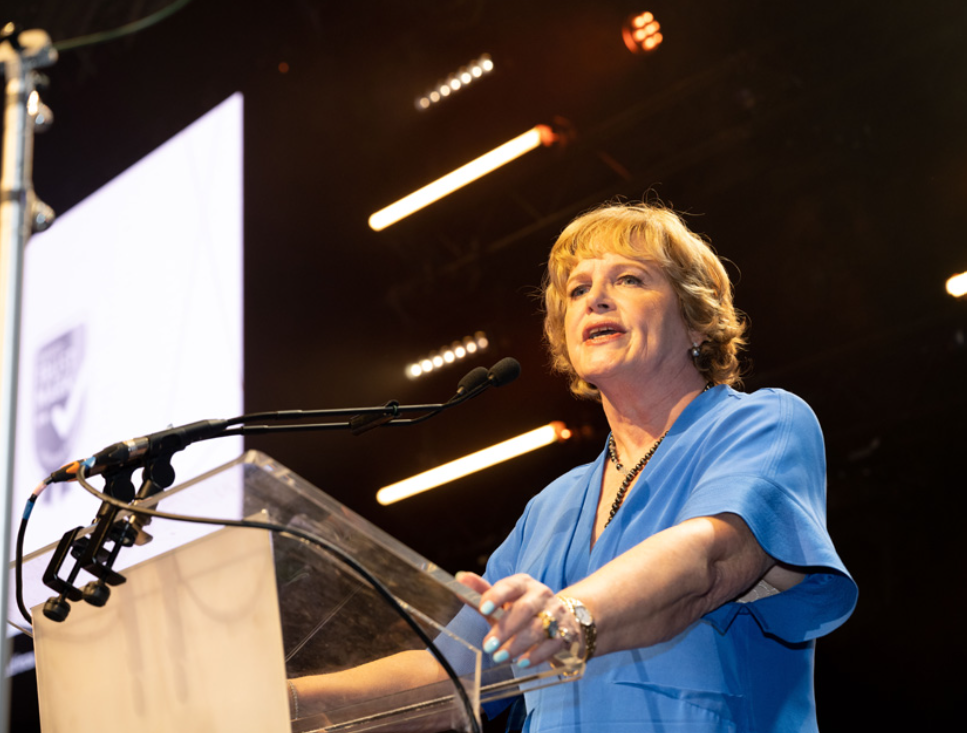
“Think big, stay curious and never underestimate the power of evidence”
Few people have experienced the world of research, strategy and evidence from as many different perspectives as Jane Frost CBE. From helping shape some of the world’s best-known brands at Unilever and Shell, to taking on pioneering roles at the BBC and in government, and ultimately leading the Market Research Society (MRS), Jane has spent her career demonstrating that research is about far more than understanding what is happening. At its best, it can challenge established thinking, influence decisions and make meaningful change possible.
Her journey has been anything but conventional. It has involved bold career moves, challenging powerful institutions, breaking through barriers and, perhaps most importantly, learning how to bring people along with her.
As CEO of the MRS, Jane has become one of the industry’s most recognisable and influential voices, championing the profession and encouraging it to recognise its wider value to business and society. But behind the impressive CV is a career full of fascinating stories, hard-won lessons and an enduring curiosity about people and the world around us.
In this Significant Insights interview, Jane shares the moments that shaped her career, the challenges that rarely make it onto a CV, the importance of allies and relationships, and why the next generation of insight professionals should never be afraid to think bigger.
Jane, every career has a beginning. Looking back, what first drew you into the world of research and insights, and what were the key moments that shaped your journey?
Early in my career, I realised two things. First, that as a woman I often had to be better than the men around me to be taken seriously. And second, that if you wanted to challenge conventional thinking or introduce radical new strategies, you needed evidence to make your case. That was what made research so powerful to me. It gave you the means to challenge assumptions, persuade sceptics and demonstrate that a different approach could deliver better results.
Throughout my career, I’ve been fortunate to work on some extraordinary challenges. At Unilever, for example, how do you persuade senior management to invest a quarter of a million pounds in advertising a declining brand like Persil, while supporting the growth of its variants? How do you challenge a chairman on his own terms and win the argument?
Later, the questions became even bigger. How do you secure a place at the board table for a team of relatively unknown strategists proposing to model the justice system? How do you persuade the Lord Chief Justice that the treatment of jurors might matter more to public trust in the system than the experiences of witnesses?
At the BBC, it was about demonstrating that the brand was greater than the sum of its individual parts. In government, it was about showing sceptical, traditionally minded Directors of Compliance that treating people better, or simply communicating with them more intelligently, could actually reduce costs.
These were all very different environments, but the underlying challenge was remarkably similar: using evidence to change minds and make things happen.
I also learnt very early that relationships matter enormously. Some of the most influential people in an organisation aren’t necessarily those with the grandest job titles. I made a point of building relationships with everyone, from heads of research to office services managers, receptionists and security personnel.
And, believe it or not, chauffeurs! A friendly chauffeur might arrange for you to share a lift home with the CFO, giving you 45 uninterrupted minutes to make your case. Never underestimate the value of an opportunity like that.
You’ve made some bold career moves. Which decisions most changed the trajectory of your career?
I’ve taken quite a few leaps into the unknown, often when the safer option would have been to stay exactly where I was.
One of the biggest was leaving what could have been a very conventional corporate career at Unilever to take a chance on becoming Marketing Director for Shell in the Gulf. It was an extraordinary opportunity, particularly as a woman at that time, but certainly not an obvious or risk-free move.
Then came the BBC. Rather than continuing to climb the corporate ladder at Shell, I took a chance on a completely new role focused on brand positioning. It was an opportunity to create something different, and that appealed to me enormously.
Moving into strategic leadership in government was another leap, bringing a completely different set of challenges, stakeholders and expectations.
And then, of course, there was the decision to become CEO of the MRS. Moving from enormous organisations into what is, comparatively speaking, a small business was a very different kind of challenge.
Looking back, the common thread is that I was prepared to take a chance on roles that weren’t necessarily well established or clearly defined. I’ve always been attracted to the possibility of creating something, rather than simply inheriting what already exists.
Careers rarely follow a straight line. What have been some of your toughest challenges, and what have they taught you about leadership?
There have been so many low points and setbacks that nobody would ever know about from reading my CV!
One of the things nobody tells you about leadership is just how much energy it takes to start something that hasn’t been done before. You’re not simply responsible for delivering the work; you’re often the person who has to supply the energy, enthusiasm and belief that keeps everyone else going.
Being the battery is a very real part of leadership, and it can be exhausting.
I’ve also lived through more than my fair share of reorganisations. They have certainly taught me to be sceptical of consultants who arrive to tell you how to do your own job!
Perhaps one of the hardest lessons has been about challenging established power structures. You cannot simply break the old boys’ network through determination alone. You have to find ways to encourage the organisation itself to reinvent how it operates.
Change can be deeply threatening to people who are comfortable with the status quo. And, sometimes, the resistance comes from places you might not expect. Other women can feel threatened by your success, just as men can.
I’ve also learnt that however experienced or successful you become, not getting the job you really wanted still hurts. That doesn’t necessarily get easier with time.
But setbacks are part of the journey. They teach you resilience, help you understand people and, ultimately, make you a better leader.
After such a varied career, what has kept you connected to research and insights? What still excites you?
The people. Without question.
There is something wonderful about working in a sector full of people who are endlessly curious about the world. The sheer variety of subjects that researchers explore, and the enthusiasm they bring to understanding them, is both fascinating and inspiring.
When I received my CBE, my children decided that our family motto should be “Stay curious”. I rather love that, because curiosity has been such an important part of my life and career.
It’s also one of the things that makes this industry special. We’re surrounded by people who genuinely want to understand why things happen, why people behave as they do and how the world might work differently.
But what really excites me is the potential of research to make a difference.
When evidence reaches the right people, and when researchers build the right relationships and alliances, it can have extraordinary influence.
I still think there is so much untapped potential in our industry. We are capable of contributing far more than we sometimes give ourselves credit for.
Thinking back to your first five years, what do you know now that you wish you’d known then?
Don’t be afraid to ask for help.
It’s such a simple piece of advice, but an incredibly important one. Nobody has all the answers, and there is no virtue in struggling alone when somebody else might be able to offer guidance, an introduction or a different perspective.
And network, network, network!
Relationships are one of the most valuable things you build over the course of a career. You never know when somebody you’ve met, worked alongside or helped might become an important ally.
And on a very practical note, keep a good contacts file. You’ll be amazed how useful it becomes over the years.
If you were mentoring someone entering the insights industry today, which qualities or behaviours would you most encourage them to develop?
First, think big.
Don’t limit your ambitions to the immediate project or the methodology you’ve been asked to deliver. Think about the wider business problem, the opportunity you’re helping to unlock and what your work could ultimately make possible.
Second, be interesting and interested. Always have something to share that will engage other people, and be willing to step outside your comfort zone to build relationships and find allies.
And third, learn how to communicate the value of what you do in a language that matters to the people you’re trying to influence.
Get to know the CFO. Understand what matters to the business. Be able to explain not just what the research says, but what it means for the organisation and what might happen as a result.
In other words, learn to speak different languages. Not literally, necessarily, but the language of finance, strategy, operations and leadership.
It’s no good having brilliant evidence if you can’t persuade the people who need it to listen.
No one builds a successful career alone. Who has made the biggest difference to yours?
Well, I’d obviously like to thank my husband, my children and my dogs!
And, of course, all those people who had enough faith in me to believe that, together, we might have a pretty good chance of making things happen.
But seriously, if I go right back to the beginning, I was incredibly fortunate to have a father who believed there should be absolutely no limit to what I could achieve. That belief matters enormously, particularly when you’re entering environments where other people may not share it.
I’ve also had a husband who has respected and supported me throughout my career, and that has made an enormous difference.
And I’ve been fortunate to work with some brilliant line managers who were prepared to take a chance on me, sometimes for roles that didn’t have an obvious precedent.
When I look back, those are the people who made the difference. They gave me confidence, opportunities and the freedom to try things that might not have seemed entirely sensible at the time.
You can have all the determination in the world, but having people who believe in you is incredibly powerful.
Finally, looking ahead, what advice would you give the research and insights industry? What needs to change if we are to remain relevant and influential?
Don’t allow yourselves to be defined by methodology.
Our value isn’t in a particular technique, tool or process. It’s in the evidence we create, the understanding we bring and, most importantly, what that evidence enables other people to do.
We also need to get much better at understanding and embracing the new language of business. Whatever the latest jargon happens to be, particularly when it’s something that makes budget holders nervous, we should be working hard to understand it and become the experts who can help them navigate it.
But above all, we need to spend more time demonstrating that evidence is a catalyst for action.
Research should not simply be something that informs a report or confirms what people already suspect. It should be helping organisations make decisions, challenge assumptions and create meaningful change.
That’s where our real influence lies, and it’s where I believe the greatest opportunities for this industry still exist.