How Did You Get There? Chris Crook
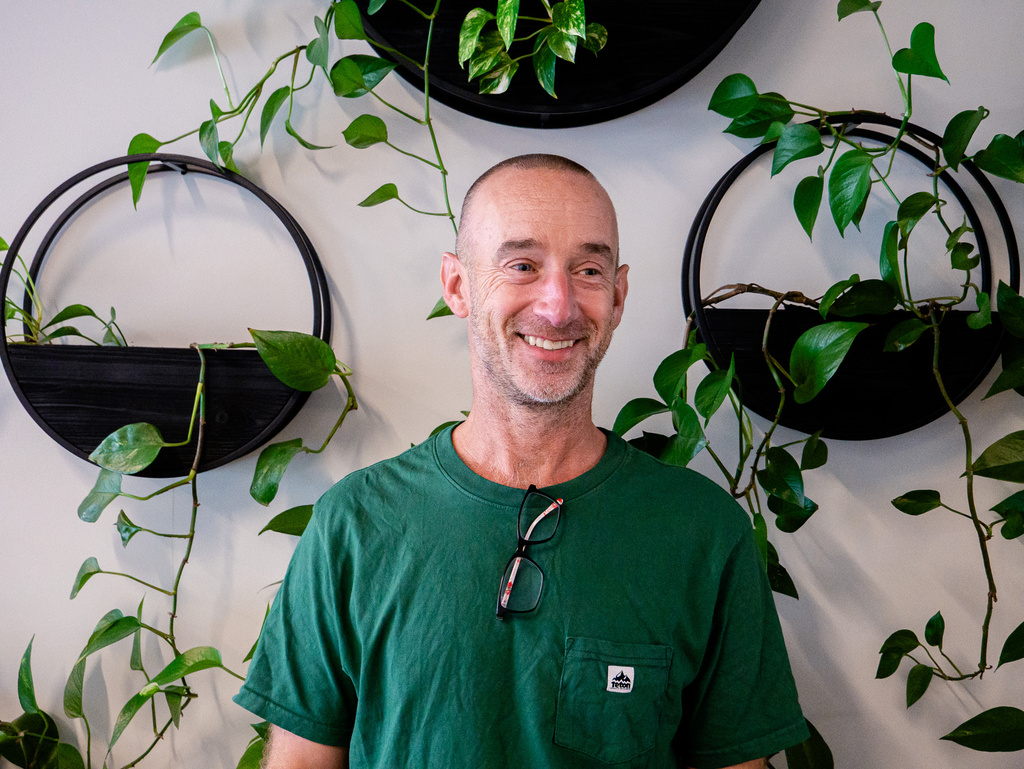
From sending 50 unsolicited letters to research agencies to building one of Australia’s most recognised insights consultancies, Chris Crook’s career has been shaped by curiosity, opportunity and a fascination with understanding human behaviour.
With more than 30 years in the industry, Chris founded Nature in 2006, growing it from a one-person operation in his Melbourne flat into an award-winning strategic insights consultancy operating across Australia and New Zealand.
In this edition of How Did You Get There?, Chris reflects on the mentors who opened doors, the presentation that nearly derailed his confidence, and the lessons he’s learned about building a successful career in insights. He also explains why the ability to move between the technical “backroom” and the commercial “front room” may be one of the most valuable skills researchers can develop in the age of AI.
Every career has a beginning. Looking back, what first drew you into the world of research, insights, data or analytics, and what were the key moments that shaped the journey to where you are today?
At the University of Tasmania, I studied psychology, sociology and geography. In third-year sociology, I was fortunate enough to take a unit in quantitative research methods. It wasn’t an especially demanding subject, but it gave me my first real exposure to using data and evidence to explain patterns in human behaviour, at both an individual and societal level.
I found that the combination of understanding people while operating within the rigour of science really worked for me. So much so that I went straight on to undertake a PhD in sociology, using large datasets to explore emerging trends in Australian society and culture.
I ultimately decided that an academic career wasn’t for me and became interested in commercial market research. This was before LinkedIn and email made these things easy, so I sent around 50 unsolicited expressions of interest by snail mail to research companies across Australia. Those conversations eventually introduced me to something I had never heard of before: choice modelling.
That led me, somewhat opportunistically, to reach out to Jordan Louviere, an American pioneer who was living in Sydney. He suggested I come and sit in on his classes in choice modelling, and that relationship ultimately took me to Edmonton, Alberta, where I joined Advanis, a consulting firm in which he was a partner. It was an incredibly formative experience. I found myself exposed to choice modelling at a time when the technique was genuinely pioneering.
I subsequently returned to Melbourne and joined TNS, where I helped develop its advanced methods capability, which went on to become a successful part of the regional business. I later became a partner at boutique consultancy Blue Moon, before deciding in 2006 that it was time to have a go at building something of my own. That was the beginning of Nature.
At around the same time, I had the opportunity to head up Telstra’s insights and analytics team. That experience was pivotal. In a relatively short period, I gained a much deeper appreciation of what sophisticated research, analytics and advanced methodologies could actually do when embedded inside a large commercial organisation. Not simply generating interesting findings, but helping people make better decisions.
That experience became an important part of the original Nature proposition: combining a deep understanding of people and human behaviour with analytical rigour, and then applying both to real commercial problems. In many respects, that thread has remained at the heart of Nature ever since.
Most successful careers include a few pivotal decisions or turning points. Which moments changed the trajectory of yours, and why?
My experience at Telstra was incredibly formative. At the time, Telstra was Australia’s largest telecommunications company, and my role gave me a very different perspective on the relationship between research agencies and their clients.
Like many insights teams, we relied heavily on external research suppliers. I noticed the team was spending a significant amount of time rewriting and reframing supplier presentations before they could be shared with internal stakeholders. The research itself was often perfectly good; the problem was that the outputs weren’t sufficiently stakeholder-ready.
That experience gave me an important insight that has stayed with me ever since: the job of an external agency isn’t simply to deliver great work. It’s to make the research manager or insights leader’s job easier. Great agencies should minimise the amount of work their clients need to do to translate, simplify or repackage their work for an internal audience.
That became an important part of the philosophy behind Nature: our work should arrive ready to travel through the client organisation, clear, compelling, commercially relevant and capable of influencing decisions without requiring the client to rewrite it first.
Careers rarely follow a straight line. Can you share a setback, failure or particularly difficult period or challenge that taught you something important and still influences how you lead today?
Around 2000, while I was at TNS (now Kantar), I had to give an internal update on my area of the business to around 70 or 80 people.
I thought I’d prepared well, but I made one important mistake: I hadn’t properly familiarised myself with the room and what turned out to be a fairly tricky presentation setup. When I started speaking, the environment threw me, I lost the rhythm of my opening, and then I looked up to see 70 or 80 familiar faces staring back at me. I completely froze.
After sitting down for a few minutes, collecting myself and allowing the adrenaline to subside, I managed to get back up, take over from the person who had stepped in for me, and actually finish the presentation reasonably well.
But the experience stayed with me. For several months afterwards, I became incredibly anxious before almost any presentation, whether internal or external, large or small. In hindsight, that period was enormously valuable because it forced me to learn how to manage myself before presenting. I developed a deliberate routine for preparing mentally and physically, controlling the adrenaline and getting myself “match-ready” before walking into the room.
It was an incredibly humbling experience, but also one of the most useful lessons of my career. When you fail that publicly, you become very motivated to understand why it happened and to make sure it doesn’t happen again!
What has kept you in this industry? After all these years, what still excites, challenges or motivates you to come back each day?
I love the art of what we do. Human beings are incredibly difficult to understand and predict, and yet our job is to try to do exactly that: to understand why people behave the way they do and, importantly, to close the gap between what people say they do and what they actually do.
What makes it even more interesting for me is applying a commercial lens to that understanding. Taking insight into human behaviour and using it to help organisations, businesses and brands make better decisions is something I find genuinely fascinating and motivating.
For someone who left school without any particularly clear professional or vocational path ahead of them, I feel fortunate to have stumbled into a profession that combines human behaviour, science, creativity and commercial problem-solving. More than 30 years later, I still find the fundamental challenge of what we do incredibly interesting.
Thinking back to your first five years in the profession, what do you know now that you wish you’d known then? And if you were mentoring someone entering the industry today, what are the two or three qualities, behaviours or mindsets you would encourage them to develop above all others?
I’d encourage anyone starting out, or still relatively early in their career in insights, to really learn their craft before delegating large parts of the workflow to other people or technology. It’s incredibly tempting to focus on efficiency and outsource the detail and the small stuff. But I think there’s a danger in doing that too early. Spend the time doing the work yourself, understanding how it works and really knowing your stuff. That foundation becomes incredibly valuable later in your career.
The second thing I’d encourage people to develop is the ability to move seamlessly between what I call the backroom and the front room.
The backroom is where you’re the researcher or analyst: technically capable, comfortable with the detail, able to interrogate the data and understand how the answer was arrived at. The front room is where you become the consultant: translating complexity into plain English, understanding what matters to the audience and communicating it in a way that helps people make decisions.
The ability to move between those two modes is powerful. It means being able to modify your style, your language and the level of detail depending on who is in the room and what they need from you.
What I particularly like about this is that it’s fundamentally a human capability. At a time when so much of the conversation in our industry is understandably about technology, AI and innovation, I think these human skills become more important, not less. Technology can increasingly help us do the work in the backroom, but the ability to understand what matters, exercise judgement, communicate clearly and influence people in the front room remains one of the biggest differentiators in the value an individual can deliver.
No one succeeds alone. Who has had a meaningful impact on your career that you’d like to thank, acknowledge or shine a light on, and what did they teach you?
Come a certain point in your career, the truth is you’ve accumulated a lot of people who have been influential and formative in your journey. When I think about the people who have had the greatest impact on me, there’s a common thread: they were generous with their time, invested in my development and, importantly, showed belief in me.
One of the earliest was Professor Frank Jones at the Australian National University. Frank gave me an extraordinary amount of his time, helping me redraft my PhD dissertation over and over again. At the time, it could be pretty painful, but he taught me how to write, a skill I value enormously and one that, arguably, is becoming something of a dying art. He also taught me the value of direct and candid feedback. It isn’t always comfortable to receive, but when it comes from someone who genuinely wants you to succeed, it’s powerful.
Professor Jordan Louviere was fundamental in opening one of the most important doors in my career. He gave me the opportunity to jump into what was then the global forefront of marketing science and choice modelling. It was an extraordinary opportunity, and so much of what happened in my career over the following years can be traced back to that moment.
My boss at Advanis in Canada, Tom Peters, was another hugely important influence. As well as being a lovely bloke, Tom was incredibly generous in helping me develop technically while also teaching me how to translate that technical understanding into clear, commercially relevant language. In many ways, that ability to move between the technical and commercial worlds became fundamental to how I approached the rest of my career.
And then at Blue Moon, I was fortunate to be surrounded by some amazing people who ultimately trusted me with the opportunity to establish and lead their Melbourne office. That belief and responsibility gave me another important platform from which to grow, and I’ll always be grateful for it.
Looking back, careers are shaped by opportunities, but behind many of those opportunities are people who choose to invest in you. I’ve been incredibly fortunate to have had a number of those people in my life, and their generosity has certainly influenced the way I try to support and develop others today.