30Under30 Nominee: Juste Rudminaite
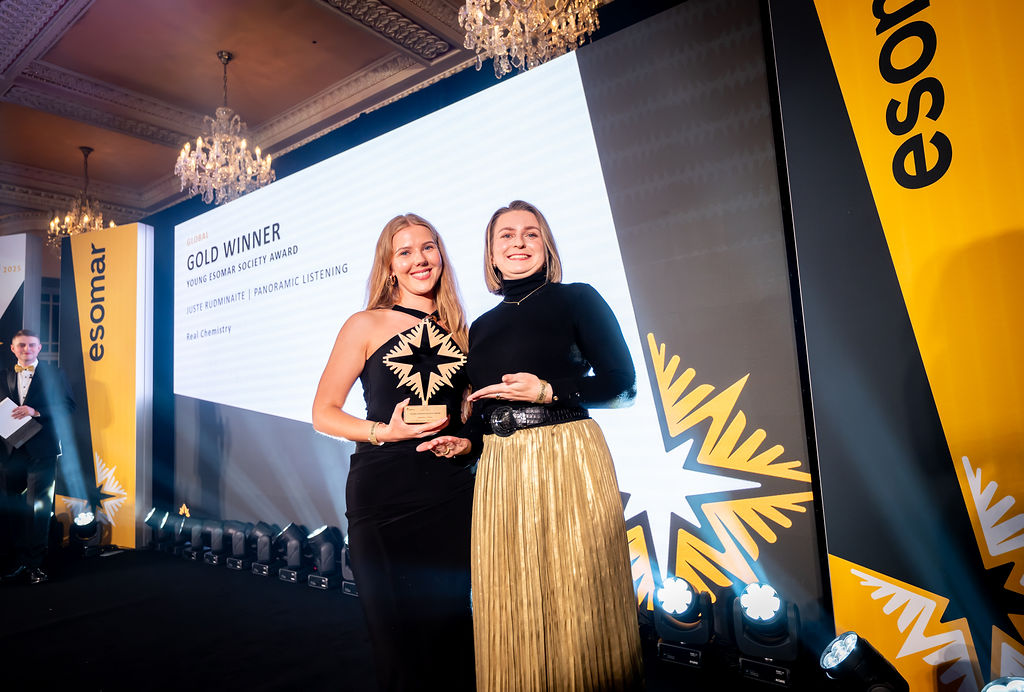
Great to hear from Global 30 Under 30 Nominee, Juste Rudminaite, an Analytics Manager at Real Chemistry, a marketing and communications agency specialising in healthcare. Juste is based in London, but is originally from Lithuania, and moved to the UK with her family when she was 11 years old. Juste’s role involves leading and supporting a wide range of projects for pharmaceutical clients. These span audience analytics, stakeholder mapping, primary market research, agentic AI and social listening.
How did you find your way into research, data and insights?
Research was not always the plan for me. Throughout secondary school, I was unsure what I wanted to do, so when it came to choosing a university and degree, I attended lots of open days and taster sessions across different subjects.
One day, while visiting the University of Kent, I attended a criminology taster lecture. I really enjoyed it and was drawn to the idea of becoming a detective or police officer. Although I didn’t end up studying at Kent, I did decide to pursue a degree in criminology.
I had also enjoyed sociology at school, so when I discovered the BSc (Hons) Criminology and Sociology degree at City, University of London, it felt like the perfect combination. During my studies, I found myself particularly drawn to the research methods modules, where I learned about qualitative and quantitative research, survey design and interviewing techniques. For my dissertation, I conducted a series of in-depth interviews, which was my first real experience of carrying out research firsthand.
By the time I graduated with First-Class Honours, I knew that research was the career path I wanted to pursue.

What part of your work are you most proud of and why?
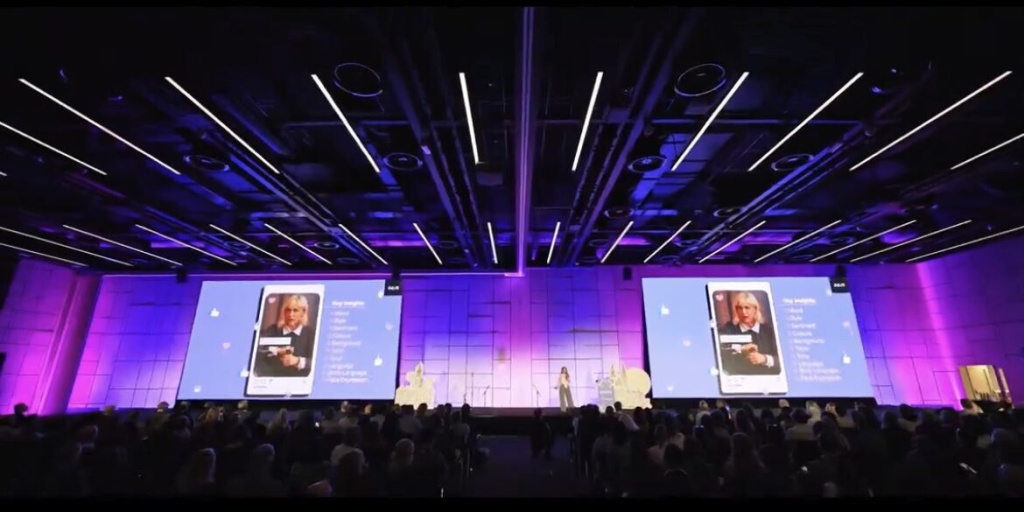
I am most proud of developing and launching an innovation at Real Chemistry called Panoramic Listening, a research capability that expands social listening beyond text to analyse video, images, podcasts and links alongside written conversations.
I identified a growing need for this because traditional social listening tools were missing a significant amount of content being shared on video- and audio-first platforms such as TikTok, Instagram, YouTube and podcasts. Working with my team, I helped build a capability that uses AI to extract rich insights from this content, including sentiment, mood, visual style and design elements.
I have since applied Panoramic Listening to complex healthcare questions, such as whether videos aimed at rare disease patients are meeting their key information needs. What started as an idea has since become one of our team’s core capabilities, and I have now delivered multimedia analysis across more than 20 client projects.
What have you learned so far that you wish you’d known when you started your career?
One thing I wish I’d known when I started my career is not to stress so much. There were many moments when I felt overwhelmed by a challenge or convinced a problem was much bigger than it really was. More often than not, a quick conversation with a manager or senior colleague would put things into perspective and sometimes even solve the issue in a single sentence.
I’ve learned that things usually work out and that asking for support isn’t a weakness. The people around you genuinely want to help and everyone is working towards the same goal.
What excites you most about the future of insights and what would you like to help change?
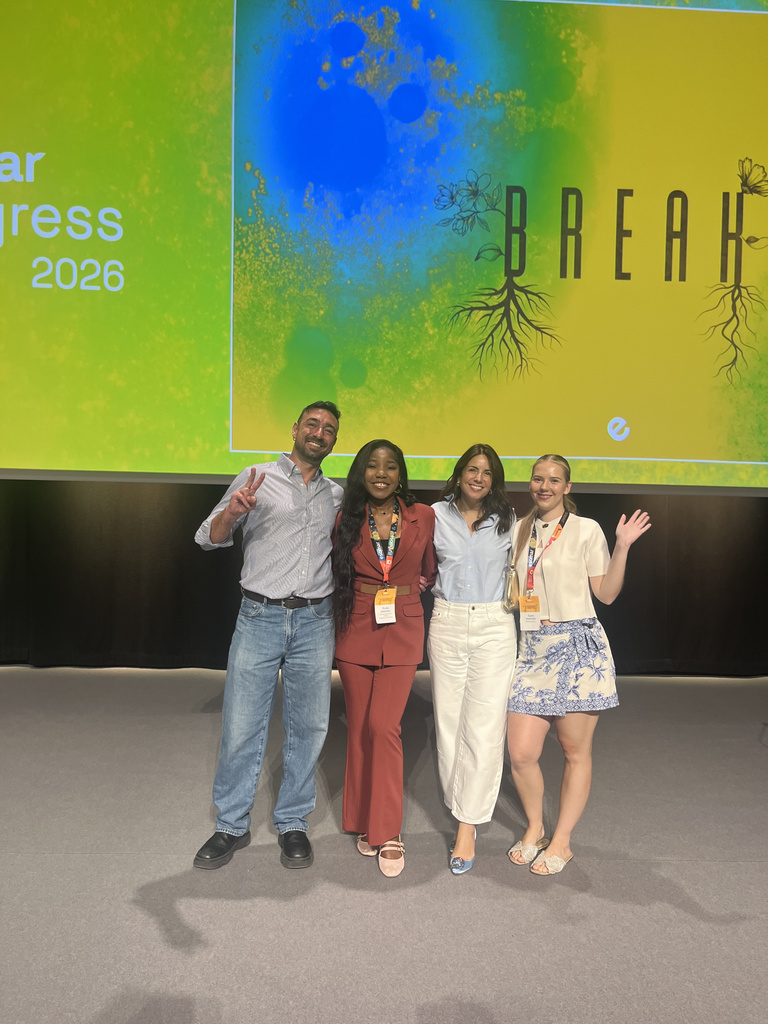
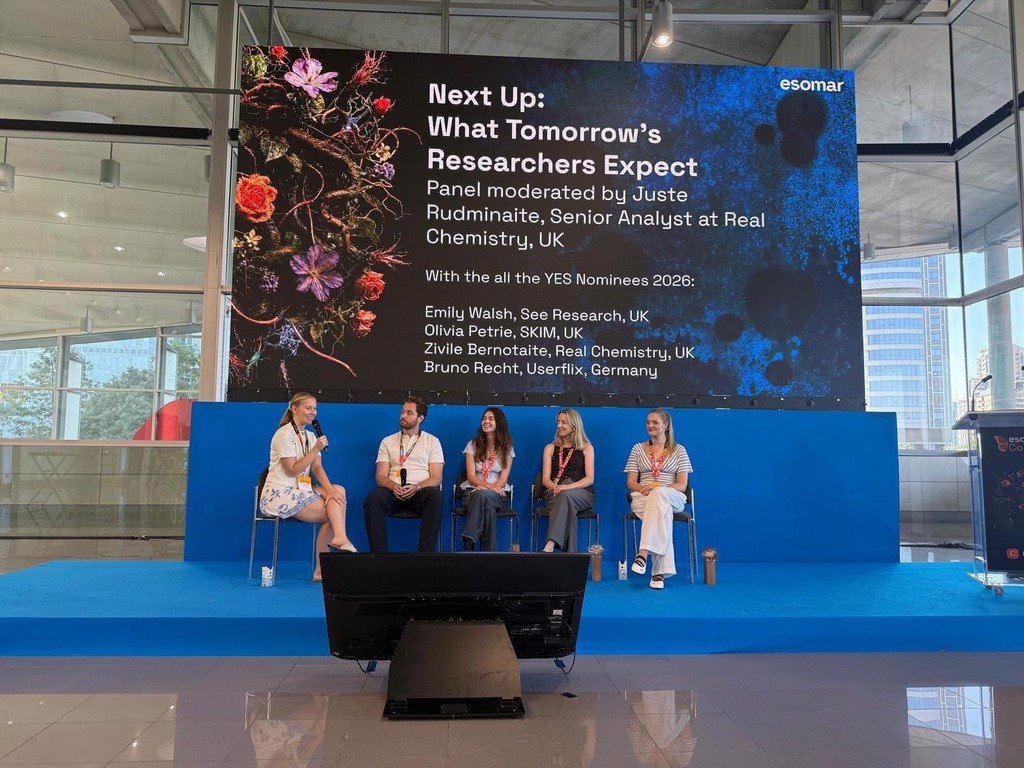
Recently, I attended the Esomar Congress 2026, where there was a lot of discussion about the future of insights and where the industry is heading. One presentation in particular stayed with me. It was called The Metamorphosis of Expertise and explored how the role of the researcher is evolving.
Researchers are increasingly moving away from simply producing and reporting data, which AI can now do very effectively, and towards thinking strategically, orchestrating evidence and supporting decision-making.
What excites me about this shift is that it broadens the skill set we need as researchers. It’s no longer just about conducting great research. It’s about validation, governance, influencing decisions, connecting different sources of evidence and helping our teams navigate uncertainty.
As someone relatively early in my career, I find that incredibly exciting because it means there is always more to learn. The congress left me feeling that the future of insights isn’t shrinking because of AI; it’s actually growing as our role evolves and expands.
What advice would you give someone just starting out in the industry today?
If I were starting my career today, I’d spend less time trying to master every new tool and more time developing the skill of questioning assumptions.
The industry is changing so quickly that it’s impossible to have all the answers. What stood out to me most at the 2026 Esomar Congress was that many of the strongest papers weren’t successful because they used a new tool or a clever methodology. They were successful because the researchers noticed something that didn’t fit the expected narrative.
For example, research on Generation Alpha found that young people weren’t simply answering research questions; they were actively managing how they appeared within the research itself. Other studies showed that people over 50 don’t behave as a single demographic group. They often hold seemingly contradictory views at the same time rather than fitting neatly into a segment.
So, my advice would be to stay curious, question assumptions and think critically. Those skills will remain valuable regardless of how the tools evolve.
Who has helped you along the way?
There are many people who have supported me throughout my career, including my family, my team and the many colleagues I’ve met across the industry.
I would particularly like to thank Stella Igweamaka for always encouraging me, championing my development and celebrating my successes just as she did by nominating me for this award. Thank you!