30Under30 Nominee: Zamir Shaikh
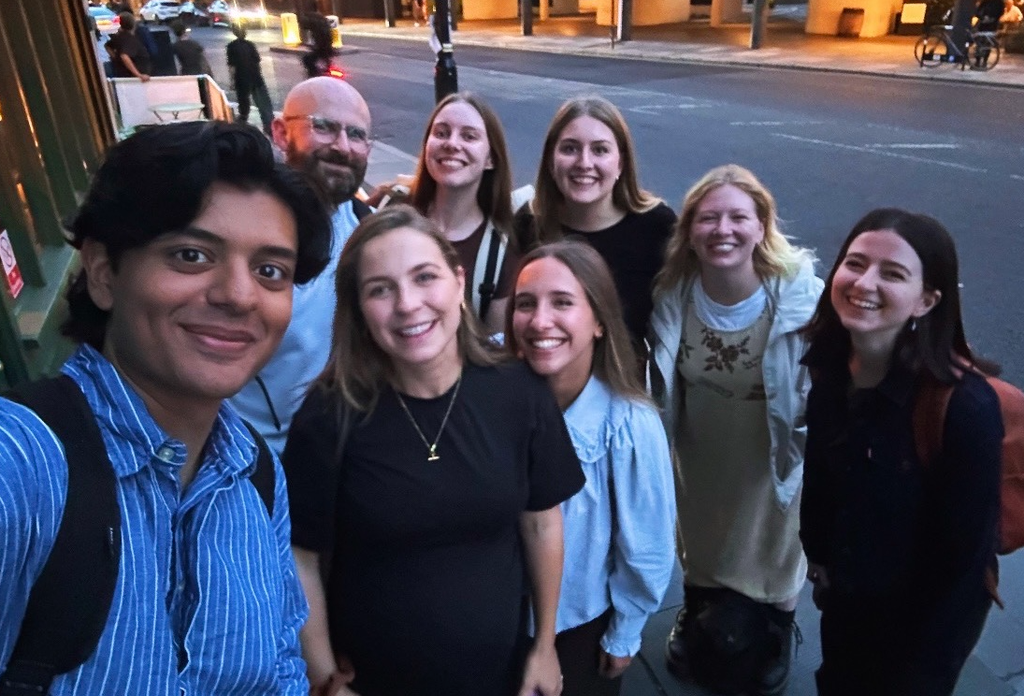
Our latest 2026 Global 30 Under 30 nominee is Zamir, a qualitative researcher at Opinium with a passion for understanding people, exploring emerging technology and protecting the human judgement at the heart of great research. With a background in history and user research, he’s brought their natural curiosity about human behaviour into a career spanning social, consumer and B2B research. As his team’s qualitative technology specialist, he’s also helping explore how AI can support researchers without losing the human connection that makes qualitative insights so valuable. We caught up with him to discuss his work on synthetic personas, the importance of patience early in your career, the people who have helped him develop and why judgement could become one of the most important skills in the future of insights.
How did you find your way into research, data and insights?
I’m a Qualitative Researcher at Opinium, based in London, and I’ve been working in the qualitative team for just over a year. I work across the full research cycle, from design and setup through to analysis, reporting and delivery, on a broad range of projects spanning social research, B2B, B2C and everything in between!
I’m also the team’s qualitative technology specialist, which means keeping a close eye on developments in qualitative research technology and making sure we’re pushing things forward where it counts, without losing sight of the human values and judgement that good qualitative research depends on.
I always had a feeling I’d end up in a career that fostered my curiosity about people, particularly why they behave the way they do and what sits behind the choices they make.
I came into research with a background in history and user research, so that interest in understanding people has always been there in one form or another. I think it also comes through in my personal life. I love travelling, particularly solo travelling, because it gives me the time and space to explore different places and cultures. I’m especially drawn to places with rich histories.
Most recently, I visited the Acropolis in Greece. What fascinates me about places like that isn’t just the history or architecture, but the people behind them. Who built these incredible structures? What motivated them? What were their lives and beliefs like? I find myself naturally looking beyond what’s in front of me and trying to understand the human stories behind it. That’s something I bring into my work too.
Market research wasn’t necessarily a career I had in mind when I started out. But as I explored where my interests and strengths might fit, it became increasingly clear that it was a natural choice. Agency life has been a big part of that. The variety means you’re constantly learning about new industries and the people within them. It really does feel like stepping into a new world with every project.
Looking back, I’m not particularly surprised I’ve ended up in qualitative insights, or that I feel so passionate about it!
What part of your work are you most proud of so far, and why?
I’m particularly proud of the work we’ve done exploring synthetic personas.
There’s already some fascinating published work and industry knowledge out there, but I’m proud that our qualitative team took the initiative to investigate the method properly for ourselves, and that we approached it with real diligence. We wanted to understand how synthetic personas actually work, where they might have a place in research, what they genuinely offer and, just as importantly, what researchers need to be mindful of when using them.
What I’m most proud of is the philosophy we brought to the project.
We weren’t approaching synthetic personas from the perspective of how best to sell or champion them. We started with what we believe makes qualitative research valuable in the first place.
Technology is developing at an incredible pace, and AI is creating some genuinely interesting possibilities. But human judgement remains fundamental to the quality and validity of research. The human voice, whether that’s the researcher or the participant, has to remain central.
I think approaching the work from that perspective allowed us to reach some genuinely interesting and considered conclusions, rather than simply looking for reasons to validate the technology.
Beyond that, it was an incredibly enjoyable piece of exploratory research. We had the freedom to test hypothetical questions, think creatively and explore something still relatively unfamiliar. To have that opportunity so early in my qualitative career, and to feel we were contributing to a wider industry conversation, was a real privilege.

What have you learned so far that you wish you’d known when you started your career?
The value of patience.
This is an industry full of ambitious people, and when you first arrive, you’re surrounded by colleagues who are at the top of their game. They have years of expertise, know how to carry themselves in a room and produce work that you can only aspire to at that stage of your career. When you’re naturally ambitious and take pride in what you do, it’s very easy to compare yourself with those people without appreciating the years of experience that have gone into getting them there. So when something doesn’t quite land first time, or you look at a piece of work and feel it isn’t at the standard you’d like, try to be patient with yourself.
Apply yourself as well as you can, but worry a little less about the immediate outcome and more about whether you’re learning and gradually improving. That brilliant slide someone has put together, or the confidence to walk a client through a research design without missing a beat, will come with time. You can’t expect to be a master of your craft on day one.
The other thing I’d say is that the people around you make an enormous difference. Find an environment where people recognise that developing your skills takes time, and where you’re given the encouragement and space to go through that learning curve.
Having that support makes it much easier to be ambitious without being unnecessarily hard on yourself.

What excites you most about the future of insights, and what would you like to help change?
As a history graduate, I’ve studied revolutions in various forms, and it’s hard not to feel we’re in the middle of one with AI. In any revolution, things are lost, but new possibilities emerge too. I’m fascinated to see how the insights industry, and qualitative research in particular, will be reshaped by it.
Qualitative research occupies an interesting position in that conversation.
Much of the discussion about AI in other industries focuses on how technology can take humans out of the equation. But qualitative research has always been defined by the human being at its centre. That’s something my colleagues and I feel strongly about protecting. We need to make sure human judgement doesn’t quietly get designed out of the research process as technology becomes more capable. I fundamentally believe there will always be a place for people in qualitative research because the connection you build with another person is incredibly difficult to replicate.
Sometimes, during an in-depth interview, it’s an inflection in someone’s voice, the way they use a particular word or a subtle change in their body language that tells you there’s something worth exploring further. Recognising those moments, and knowing when and how to follow them, is a very human skill. What excites me most is discovering where AI can genuinely make a difference while giving researchers more room to lean into the qualities that make them good at what they do. If technology can take away some of the more time-consuming tasks, we have an opportunity to spend more time thinking, being curious and exercising our judgement.
That’s a really exciting direction for the industry, and something I’d love to help shape.

What advice would you give someone just starting out in the industry today?
I think we all enter the industry with a set of raw skills. Whatever you’ve studied or done before will have shaped those skills, but a big part of progressing in your career is learning how to sharpen them. And that takes time. For qualitative research specifically, the skill I’ve found most rewarding to develop is judgement. It runs through practically every stage of the research cycle.
On a kick-off call, it’s about developing an instinct for what the client’s real priorities are, sometimes beyond what they’re explicitly telling you. When you’re writing a screener or discussion guide, it’s being able to step back and ask whether what you’ve created is genuinely doing what it needs to do. And when you’re sitting opposite a participant, it’s having the awareness to read the conversation, recognise when there’s something worth exploring and know when to take it in a different direction.
Your emotional intelligence, communication skills, ability to listen and how you work with other people all contribute to that judgement. It’s something that comes with experience, but also from being willing to reflect on your own decisions and understand why you’ve approached something in a particular way.
My advice would be to embrace that process rather than put too much pressure on yourself to get everything right immediately. You’re going to make mistakes. That’s inevitable. I’ve seen them happen at every level, from junior researchers through to senior colleagues, and the vast majority of the time they’re things that can be worked through and put right.
If you’re approaching your work with good intentions, willing to learn and fortunate enough to have a supportive team around you, failure really isn’t something you should be afraid of.

Who has helped you along the way?
I’ve been incredibly lucky at Opinium to find myself surrounded by such an excellent team. It’s actually something I don’t think I placed enough emphasis on when I was initially looking for my first industry role.
When you’re searching for a job, you’re naturally focused on the position itself, finding your feet and figuring out where you might fit. The people and environment you’re joining can sometimes become secondary. But I’ve been fortunate to arrive in a qualitative team that had an almost immediate family feel.
There’s been a level of comfort and openness from the outset that’s made it easy to be myself, ask questions and really throw myself into the work. I’ve genuinely felt that the people around me care about me, both personally and professionally. They’re always looking for opportunities to help me grow, but there’s also a real interest in understanding the person behind the role.
Alice Sarkany, in particular, has been fundamental to that experience. We’ve developed a strong manager-employee relationship alongside a genuine mentorship dynamic. She has a really good understanding of where I am in my career, the directions I might want to explore and, importantly, why those things matter to me. She’s always been incredibly open to listening to where I am and where I might want to take things next. Having someone who is genuinely invested in you at the start of your career makes an enormous difference, and I’m very grateful to have that in Alice.
That same attitude runs throughout the wider qualitative team. It’s a group of people who are very much cut from the same cloth, and that collective sense of support has made Opinium a really positive place to develop.