30Under30 Nominee: Shaia Erlbaum
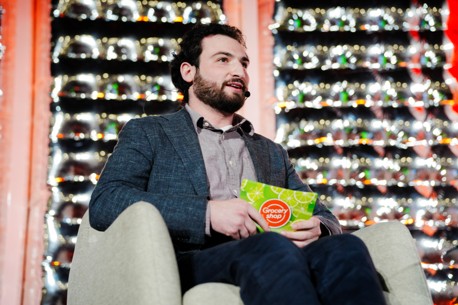
Great to hear from Global 30 Under 30 Nominee, Shaia Erlbaum, Co-Founder and CEO of Merciv, based in New York. Shaia’s focus is on helping brands bring together fragmented consumer data and leverage AI to better understand how consumer behaviour is changing, what’s driving those shifts and what they mean for their business.
How did you find your way into research, data and insights?
Research and insights were not where I expected to end up. I started my career in very different environments, from working as an EMT, in the middle east, to working in film and creative at Universal Music Group, before eventually building a creative technology studio that worked with major consumer brands such as McDonald’s, Lexus, Hyundai and Jack Daniel’s.
Through that work, I kept seeing the same challenge come up. The brands we worked with had enormous amounts of data, but they were relying on outdated legacy systems that hadn’t evolved alongside the industry. These systems made it difficult to turn the wealth of available information into actionable insights that could inform timely, strategic decision-making.
Before generative AI became mainstream, we started exploring how AI and machine learning could help make sense of those disconnected signals more effectively. That work eventually became the foundation for Merciv. So, I found my way into the industry by following a problem that kept showing up and realising there was a better way to solve it.

What part of your work are you most proud of and why?
For me, the most meaningful measure of progress isn’t just about making research faster. It’s about helping people spend more time applying their creativity, expertise and judgment to the decisions that matter.
One of the most rewarding moments was hearing directly from a customer about how Merciv had changed the way they work. They shared that they were having more fun in their role and felt more strategic and creative, with more time to focus on the work they genuinely enjoyed. Hearing that reinforced why we started Merciv in the first place. It’s not just about what the technology can do, but what it enables people to accomplish.
We’ve also seen teams bring together internal and external research in one place, significantly reducing the time it takes to move from a business question to actionable insights. That allows people to spend less time searching for and organising information and more time interpreting findings, developing recommendations and making informed decisions.
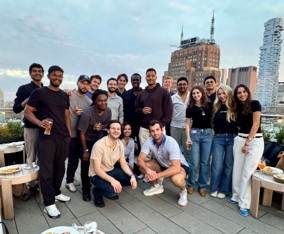
On a personal level, I’m also incredibly proud of growing our team from just two people to 23 in New York City while building a great culture along the way. Seeing both our customers and our own team thrive has been one of the most fulfilling parts of building Merciv.
What have you learned so far that you wish you’d known when you started your career?
One thing I wish I had understood earlier is that more information does not automatically lead to better decisions. Early in my career, I think I assumed that if you could gather enough data, the right answer would eventually become obvious. In practice, that is rarely how it works.
What matters much more is understanding which signals are meaningful, how they fit together and where the gaps are. That has become especially clear in the work we do today, where companies often have an enormous amount of consumer data but still struggle to see the full picture because it lives across different teams, systems and sources.
I’ve also learned that speed and certainty are not the same thing. You need enough credible evidence to make a thoughtful decision, a clear understanding of what you do not know and the willingness to adjust as new information comes in.
That realisation has changed how I approach both building a company and working with customers. I spend much less time looking for a single definitive answer and much more time asking whether we have the right evidence, whether we understand the context and whether the decision can evolve as the situation changes.

What excites you most about the future of insights and what would you like to help change?
What excites me most is what happens after the insights, when a better understanding of consumers leads to meaningful change. When brands truly understand what people want, they can create better products and experiences while avoiding costly decisions that miss the mark. Businesses waste more than $1 trillion annually on these kinds of miscalculations, creating an enormous opportunity to reduce both financial and physical waste.
We started with consumer intelligence because consumers are incredibly complex. Understanding their behaviours, preferences and motivations is one of the hardest challenges businesses face. If we can solve that problem effectively, I believe we can apply the same technology and approach to other industries and challenges, scaling that impact in new and meaningful ways.
Ultimately, what motivates me isn’t just making research faster or more accessible. It’s the potential to turn better intelligence into better decisions at scale, creating lasting value for businesses, consumers and the broader economy.
What advice would you give someone just starting out in the industry today?
My biggest piece of advice would be to find something you’re genuinely curious about and excited by and pursue it with everything you’ve got. I believe excitement fuels curiosity, and curiosity drives learning, growth and the ability to retain what you’ve learned. When you’re passionate about something, you’re naturally motivated to explore it further, ask questions and develop a deeper understanding.
I’d also encourage anyone entering the industry to embrace as many new tools and technologies as possible. We’re working in a field that’s constantly evolving and there are incredible opportunities to learn by experimenting with what’s available. Rather than being intimidated by unfamiliar technologies, approach them with an open mind and a willingness to explore what they can do.
Most importantly, I’d encourage people to worry less about having everything figured out from the beginning. Find the excitement in what you’re doing, stay curious and don’t let the fear of change hold you back. Some of the most valuable opportunities come from being willing to try something new, even when you don’t know exactly where it might lead.
Who has helped you along the way?
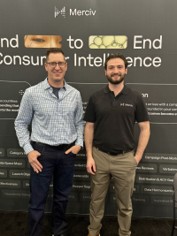
There are a few people who have had a tremendous impact on my journey, but one person I’d especially like to thank is my co-founder, Baptiste (Bapt) Leroux. He’s been instrumental in taking some of my wildest ideas and ambitions, keeping me grounded and helping turn those visions into something real. He’s someone who challenges my thinking, keeps me grounded and has an incredible ability to turn even the most ambitious ideas into reality. I wouldn’t be where I am today without him.
Another person who had a lasting influence on me was my 11th-grade calculus teacher. While I learned plenty in the classroom, the lessons that stayed with me most weren’t necessarily about mathematics. He taught me more about character and integrity than almost anyone else I’ve encountered, and those values have continued to shape how I approach both my personal and professional life.
Around that same time, I was also fortunate to be surrounded by people who encouraged my curiosity to learn and explore new ideas. Looking back, those early influences played an important role in shaping the way I think today. I’m incredibly grateful for the people who have challenged me, believed in my ideas and helped me turn that curiosity into something meaningful.