Empathy in Insight: Are We at a Critical Point?
Introducing The Empathy Exchange
At a time when AI can analyse, predict and simulate human behaviour at extraordinary speed, our ability to genuinely understand one another has never mattered more.
The Empathy Exchange is a new Significant Insights series from Clare Woodward and Suzanne Martin, exploring empathy as one of the most important, and perhaps underestimated, skills in insight.
Across the series, Clare and Suzanne will examine what empathy really means for researchers today, why it matters commercially as well as humanly, and how storytelling, connection and belonging can help us turn understanding into impact.
They begin with a provocative question: ARE WE REACHING A CRITICAL POINT FOR EMPATHY?
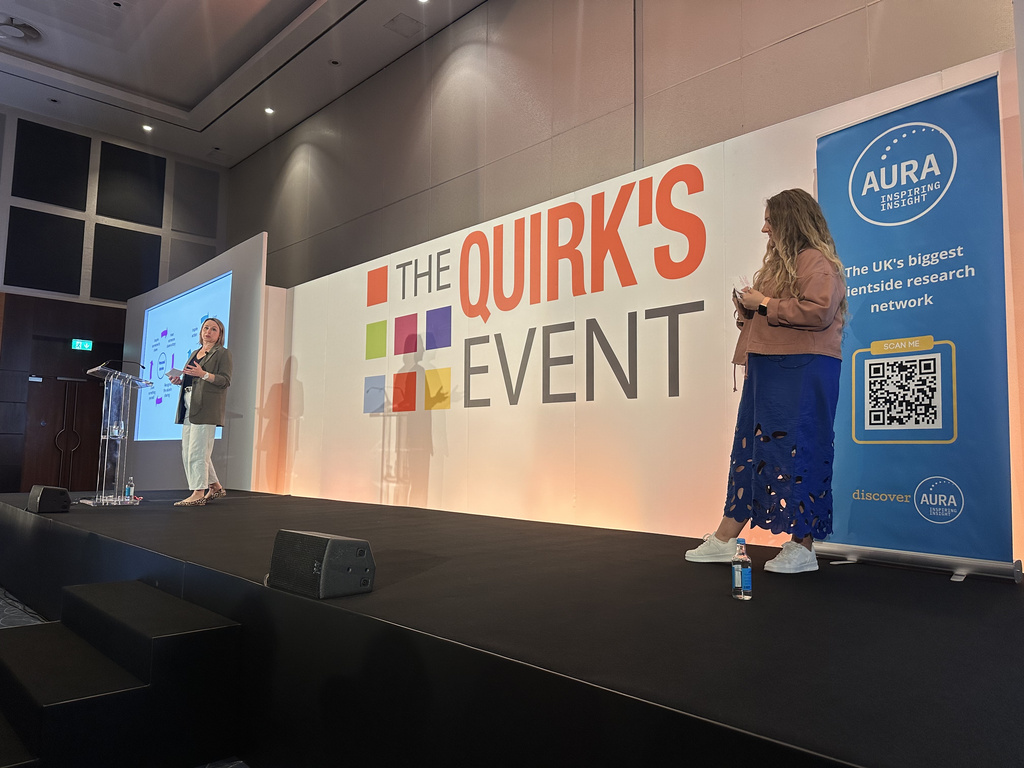
Last year, we delivered a talk at Quirks entitled ‘The Power of Empathy’. We argued then that empathy is a foundational skill for insight professionals. A year on, that argument feels even more urgent.
So, are we at a critical point for empathy? We believe we are. Not because empathy has disappeared, or because people have become less empathetic, but because the conditions that enable empathy are becoming harder to sustain.
The evidence does not suggest that empathy itself has declined, but it does point to a weakening of the conditions that allow empathy to be practised; trust in people who are different from us, openness to opposing views, tolerance of disagreement and a belief that we still have something in common.
Recent research from King’s College London and Ipsos found that perceptions of division in the UK have reached their highest point since tracking began in 2020, with 84% saying the UK feels divided.
The 2026 Edelman Trust Barometer describes this as a ‘crisis of insularity’, where people retreat into smaller, more familiar circles that reflect their own views. The issue is that disagreement can create distance, making it harder to empathise with and understand one another. Empathy depends on being able to imagine that another person’s experience is real, even when it is different from our own.
Social media can reinforce this tendency, by exposing us to more of the views we already agree with, and fewer opportunities to engage meaningfully with perspectives that challenge us. In the UK, Edelman reports that 76% of people are unwilling or hesitant to trust someone whose values, facts, problem solving approaches or cultural background differ from theirs. And as AI powered recommendation systems become more sophisticated, there is a risk that these echo chambers become even more personalised and persuasive.
In a more divided, more automated and more pressured world, empathy becomes less of a personality trait and more of a professional discipline. A way of listening carefully, challenging our own assumptions and helping us stay connected with one another.
For insight teams, these trends create a particular challenge because our work depends on the ability to move beyond our own assumptions. If participants, stakeholders and researchers are all operating in environments that reward certainty, speed and affiliation with like minded groups, then the work of truly listening becomes harder. Yet it is precisely in these circumstances that empathy becomes most valuable.
Consider this alongside the growing adoption of AI and the case for empathy becomes more urgent. With AI increasingly capable of predicting behaviour, summarising sentiment and simulating understanding, it creates huge opportunities for insight, but also a risk: that organisations mistake simulation for genuine understanding.
Prediction can tell us what people might do. Empathy helps us care about why they do it.
For researchers and insight professionals, empathy goes beyond simply gathering data. It involves a genuine interest in understanding the needs, concerns, behaviours and aspirations of participants. It means representing people accurately, caring about the truth and recognising the human consequences of business decisions.
In practice, empathy delivers value in at least three ways:
- Empathy stops us reducing people only to segments, data points or behavioural predictions, and keeps us focused on the humans behind the evidence.
- Empathy improves stakeholder influence. It helps insight teams translate evidence in a way that connects with the priorities, pressures and decisions of the business.
- Empathy strengthens partnerships. It supports better briefs, more realistic conversations, healthier client-agency relationships and ultimately better work.
So empathy is not a soft add on. It is central to good research, good teams and good partnerships. It helps us listen without judgement, create space for diverse viewpoints and build the trust needed for insight to have impact.
If we accept that we are at a critical point for empathy, then as insight professionals we have both a challenge and an opportunity. In a world increasingly driven by automation, prediction and polarisation, our value lies not simply in understanding what people do, but in helping organisations understand people themselves. And if we can do that better, empathy becomes both a competitive and a commercial advantage.
The question is no longer whether empathy matters. It is whether we are willing to build it deliberately into how we work. The challenge now is to treat it as a discipline: something that can be practised, strengthened and built into how we work with participants, stakeholders, agencies, clients and each other.
This article is the first in a series exploring the role of empathy in the research and insights industry. In future articles we’ll be exploring the role of storytelling, connection, and belonging, in building empathy to drive impact.
Source: 1. uks-changing-culture-wars-division-tension-and-common-ground.pdf Online representative sample of 4,027 adults aged 16+ across the United Kingdom between 21 and 27 August 2025
2. 2026 Edelman Trust Barometer | Edelman Fieldwork conducted: Oct 25 – Nov 16, 2025