Beyond the professional: What we learned from The Empathy Exchange [Part 1]
The Empathy Exchange, a Significant Insights editorial series created by Clare Woodward and Suzanne Martin, explores the role of empathy in research and the relationships that shape our industry. Through personal stories and honest reflections, the series asks whether empathy is under threat in an increasingly pressured, technology-driven world, and what we can do about it.
In November, we brought those conversations to life at our first Significant Insights event, hosted by Opinium in London. In this first of two follow-up articles, Clare and Suzanne reflect on the powerful experiences shared during the evening, what they revealed about the people behind our professional roles, and why making space for human connection matters more than ever.
Why empathy needs our attention
When we launched The Empathy Exchange, we asked a deliberately challenging question: Are we at a critical point for empathy in research?
Throughout this series, we have argued that empathy matters both in the research we do and in how we work together. Both depend on looking beyond what is immediately visible to understand another person’s experiences, needs and context.
Yet tighter budgets, stretched resources and technological advances can put pressure on our ability to demonstrate empathy consistently. The event gave us a chance to explore the risks these pressures pose to empathy and discuss what can happen when we make space to connect as humans.
What we saw at The Empathy Exchange was a strong desire to build these connections. We were reminded that research is full of thoughtful, generous and interesting people who want to support one another and do good work. That was evident during the event and in the conversations that continued afterwards.
One event was never going to give us all the answers. But the stories and conversations reinforced a central idea: empathy starts when we see the person behind the professional.
The person behind the professional
Under pressure, it’s easy to focus on deadlines, deliverables and the next task. We see the professional role before we see the person carrying it.
Our panellists’ stories brought this into focus. They spoke about experiences including chronic illness, parenthood, bereavement, burnout, isolation, leadership pressure and changing roles. Different experiences, but a shared reminder: we rarely know everything another person is bringing into work. When we take the time to understand a little more, it can fundamentally change how we respond to them.
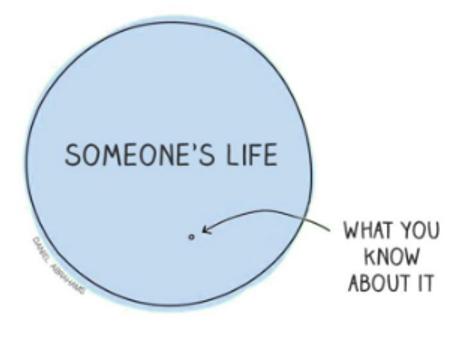
Hearing those stories gave us a fuller picture than a role or job title ever could. The most powerful moments came from people talking as people, not simply as researchers, clients, agency leaders or suppliers.
Empathy is fundamental to being a good researcher. We care about finding the truth, representing people accurately and ensuring that voices are not overlooked. We care about creating change, improving services and developing products that make people’s lives better. Surely we should bring that same commitment to understanding people into our relationships with one another.
What happens when somebody goes first
Stories were not simply presented at The Empathy Exchange; they were exchanged. When somebody shared an experience, others recognised something of their own, and conversations moved beyond the usual professional introductions. Those exchanges continued afterwards.
We saw how one person’s openness could create an opening for somebody else. By opening up first, they appeared to give others permission to do the same.
Personal storytelling requires individual judgement, and nobody should feel they have to share more than they’re comfortable with. People also need to feel they’re in a safe environment to share. But when we create the right conditions for understanding one another more fully, it can build trust, strengthen relationships and create a greater sense of belonging. It can also help us work better together because we’re no longer relating only to a role or job title. We’re relating as people.
Empathy under pressure
At the event, there was no pretence that putting these principles into practice is easy.
The conditions in which our industry is operating are tough. Budgets are tighter, resources are stretched, economic uncertainty continues and new technology is reshaping how work is delivered. Under these pressures, efficiency can override care, even when that isn’t anybody’s intention.
Our panel described how uncertainty can encourage people to protect their position, defend their territory or prioritise immediate survival. When people are operating from a place of scarcity or anxiety, it becomes harder to step back and make space for somebody else’s needs.
Technology and remote working have also changed the spaces in which relationships develop. A virtual meeting might be efficient, but it can remove the informal interactions surrounding it: the conversation in reception, the walk to the room, the chat while getting a drink or the few minutes afterwards when somebody shares what’s really going on. Those moments can look unproductive, but they’re often where we learn about the person and their needs beyond the task in front of us.
When every interaction begins with an agenda and ends when the call closes, communication can become purely transactional. We may know what somebody needs us to do, but not necessarily how they work, what pressures they’re facing or what’s important to them.
That doesn’t mean we need to return to one particular way of working. Flexible and remote working provide important benefits and allow many people to participate more fully. It does mean we have to be more deliberate about creating the human interactions that may once have happened incidentally.
That is exactly why empathy cannot be treated as something that will look after itself.
The event did not resolve these tensions. It did remind us why they matter: empathy needs space in our working relationships as well as in our research, especially when time and attention are stretched.
Like any capability, it needs attention and practice. It needs leaders who model it, teams that make space for it and individuals who are prepared to pause and consider the person behind the professional.
So, if empathy becomes harder when we’re busy, stretched or under pressure, what can we do about it?
In Part 2, we’ll explore some of the practical ideas that emerged from the panel, from listening differently to finding the right balance between openness and boundaries.