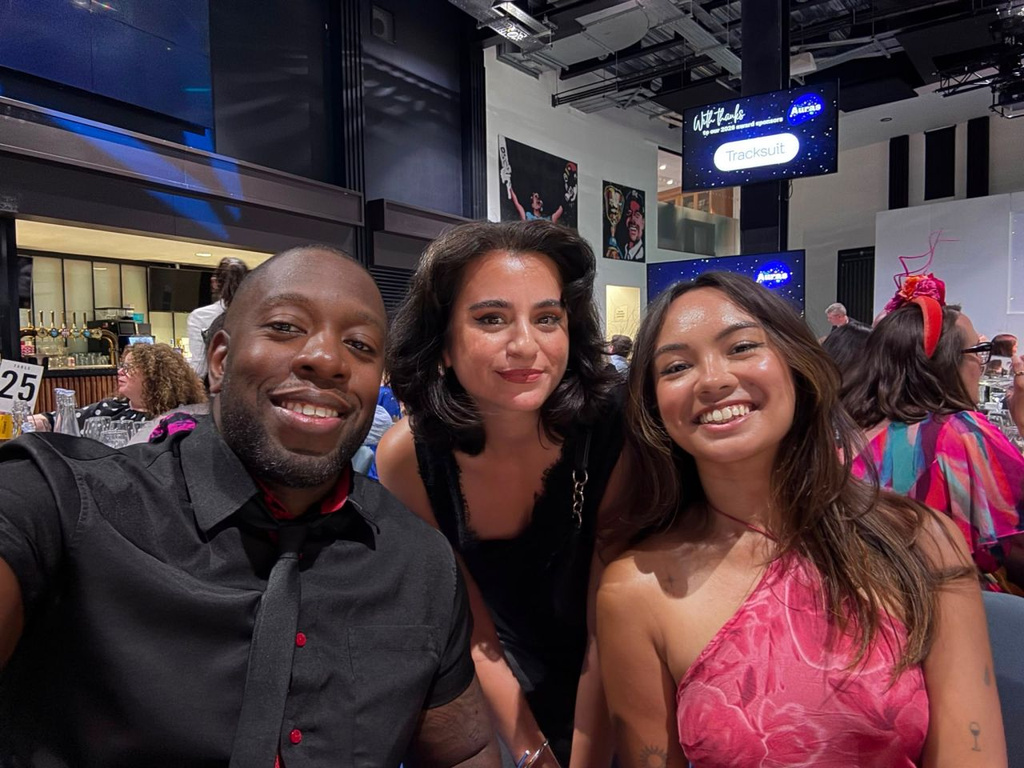
30Under30 Nominee: Annabelle Jones
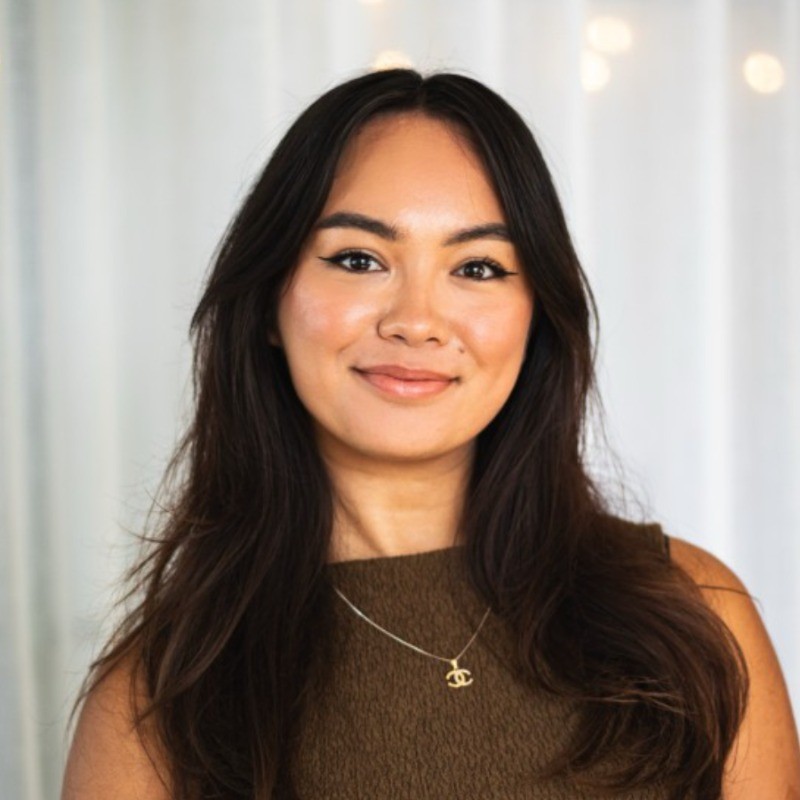
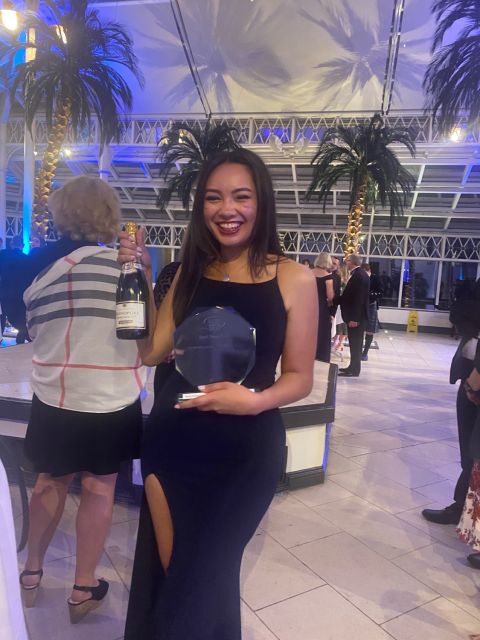
Great to hear from Global 30 Under 30 Nominee, Annabelle Jones, a Senior Research Manager in the Healthcare and Pharma team at Simpson Carpenter, based in London. Annabelle works across qualitative and quantitative research, helping clients understand patients, healthcare professionals and the wider human context behind health decisions. Annabelle turns that complexity into clear, actionable insight that can shape strategy, communications and the way organisations think about the people they serve.
How did you find your way into research, data and insights?
Completely by accident.
I studied Biomedical Sciences and actually had an offer for graduate-entry medicine, so I was very much on a healthcare path; just not this one. Getting that offer, which was something I had been working towards my whole life, didn’t fill me with the joy it should have. I did some Googling as I quickly realised I now needed to find another career! I searched up things like “healthcare”, “creative”, “problem solving” and “London graduate job” and I stumbled on some pharma market research agencies. I quickly realised it gave me a weirdly perfect mix of many of the things I like about medicine, plus more: people, psychology, evidence, problem-solving and storytelling.
I started out in healthcare research and have stayed close to that world, but my career has become much broader over time. I’ve worked across different agencies, methodologies and types of research, and I’ve also ended up doing quite a lot outside the day job around DE&I, representation, writing, speaking and now AI in research. I definitely didn’t have a grand plan, but I think that’s part of why I’ve enjoyed it so much.

What part of your work are you most proud of and why?
Probably the work I’ve done around inclusion, because it feels like the bit of my career where I’ve been able to have an impact beyond an individual client project. I’ve been involved in DE&I work for years, including co-founding a committee earlier in my career, establishing DE&I practices in a former agency, being part of the steering committee for Colour of Research and co-hosting its podcast, writing and speaking about inclusion, and more recently looking at how identity affects people’s experience of AI-led research.
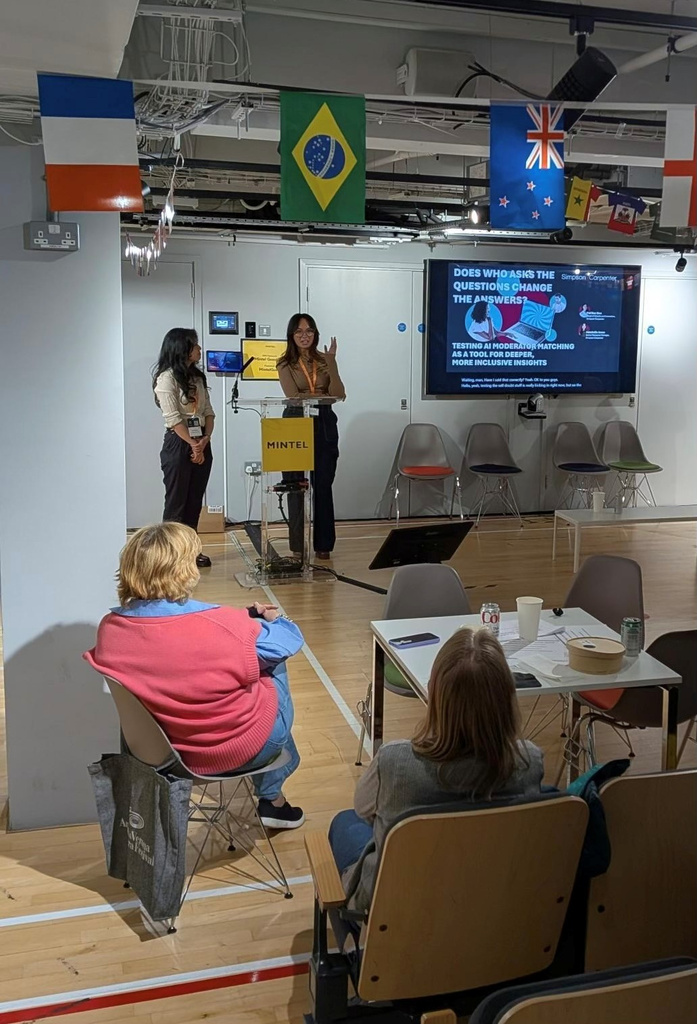
One piece of work I’m especially proud of explored whether participants responded differently to AI moderators depending on who the moderator appeared like. The finding I keep coming back to is that the moderator is part of the method. People don’t suddenly stop bringing their identity, experiences or assumptions with them just because the person interviewing them is an AI. I liked that project because it sat right in the middle of everything I find interesting: people, technology, methodology and inclusion. I’d love to do the experiment again with a variety of ethnicities in human moderators to further my hypothesis that the moderator truly is part of the method!
What have you learned so far that you wish you’d known when you started your career?
That you don’t need to know everything before you’re allowed to have an opinion.
Early in my career, I think I assumed the most senior person in the room probably knew best, and that my job was mainly to absorb as much as possible and sit silently. Obviously learning from experienced people is important, but I’ve realised that some of my biggest opportunities have come from questioning something, suggesting a different way of doing it or putting an idea forward before I felt 100% ready. Curiosity, judgement, asking the uncomfortable extra question and being able to explain something simply are much more important than memorising methodologies.
Also, that your career doesn’t have to make sense while you’re in the middle of it. I started out thinking I was going to be a doctor, then found my way into research. Subsequently, some of the most valuable parts of my career have come from things that weren’t really part of any plan at all such as writing, speaking, DE&I work, mentoring and now even podcasting! I think I used to worry more about whether each move was taking me in the “right” direction. Now I think it’s much more about following the things you’re curious about, building skills and noticing what gives you energy. Often the thread only becomes obvious when you look backwards.
What excites you most about the future of insights and what would you like to help change?
What excites me most is that the next generation of researchers seems increasingly willing to question some of the assumptions the industry has inherited, including things like who we see as a representative audience, whose experiences are treated as the default and, internally, what good company culture looks like.
I’d like to help push that further, particularly when it comes to inclusion. We’ve made progress on representation in our samples, and while there’s still a lot of work to be done there, inclusion should go beyond who we recruit. It should shape how we design research, who asks the questions, how safe people feel taking part and whose perspective is ultimately trusted when we interpret what we hear.
For me, that isn’t a separate DE&I agenda, it’s simply part of doing better research! I think our generation has a real opportunity to keep the best parts of the profession while being much less precious about “the way things have always been done”.
What advice would you give to someone just starting out in the industry?
Say yes to opportunities.
Some of the best things I’ve done in my career have had very little to do with my actual job description at the time – joining committees, writing articles, speaking at events, mentoring people, doing podcasts and testing new ideas.
Learn the basics properly, but don’t become so obsessed with doing research “correctly” that you stop being curious. And don’t panic if you don’t know exactly what you want your career to look like. I literally started out thinking I was going to be a doctor. Careers are long. You can change direction. Also, learn how to tell a good story. Nobody has ever said, “I wish that insight deck had 30 more charts”.
Who has helped you along the way?
So many people, honestly.
Shazia Ginai was matched with me very early in my career through the Women in Research (WiRE) mentorship scheme, and she has been a huge source of support ever since. Through some of the harder moments and unexpected changes in circumstance, she was a real constant and has an amazing ability to create a community around people when they need it most. She was also the person who spent about three years telling me I should join the CORe steering team before I finally listened and joined in 2025.
I also owe a lot to Pete Gibson and the team at Branding Science, who hired me into my first research role and gave me my start in the industry, and to Yasmin Talsi and Natasha Patel, who were hugely formative first line managers and really shaped the researcher I am today.
At Simpson Carpenter, P-T Man and Kirsten Walker have also been brilliant at encouraging me to put myself out there more, whether that’s writing articles, speaking at conferences or just backing me to share my perspective more publicly.
Then there’s the wider CORe team, especially Cathia, my podcast co-host, who has become such an important collaborator, friend and overall rock.
And finally, I genuinely think every team and every person I’ve worked with has taught me something. And outside of work, my partner, friends and family deserve a very big thank you for keeping me sane, backing me through every change and reminding me that there is in fact a world beyond research.