30Under30 Nominee: Alex Simon

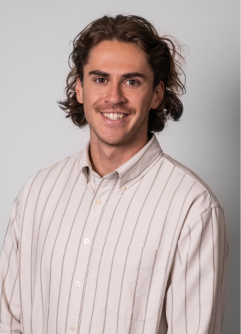
Great to hear from Global 30 Under 30 Nominee, Alex Simon, an Insight Manager at Sage, based in London, where he conducts research across the UK, US and Europe. Alex’s role focuses on helping teams better understand the needs, behaviours and challenges of small businesses and accountants. Originally from New Zealand, Alex has spent the last eight years working across customer research, UX and product innovation in New Zealand, the United States and the UK.
How did you find your way into research, data and insights?
Research wasn’t the plan when I started university. I studied Design Innovation and Marketing because I was interested in understanding people and real-world problems. Through that degree, I learned about human-centred design and ethnographic research, and realised I enjoyed the process of designing for how people actually live and work in their natural environments instead of just making assumptions.
I’ve also always been drawn to storytelling. Growing up, I was fascinated by journalism and documentary filmmaking, particularly the ability to explore the weird, wonderful and uncomfortable parts of life and share perspectives that might otherwise go unheard. I studied photography throughout high-school and university and loved using visual storytelling to understand and communicate experiences. Looking back, I think that naturally led me towards a career in research.
I’ve been fortunate to spend much of the last five years travelling, living and working in different parts of the world. I’ve been incredibly lucky to have lived my whole life in New Zealand, but being so far away from the rest of the world made me constantly curious. My travels have led me to experience different cultures, meet people with very different backgrounds and learn how people see the world through different lenses.
I started my career in New Zealand working in UX and customer research before moving to Seattle and later London. Along the way I’ve worked with organisations ranging from startups to global brands, but the thing I’ve enjoyed most has remained the same: speaking with people, understanding their experiences and helping businesses make better decisions because of what we learned.
Over the last three years, I’ve focused primarily on understanding small businesses at Xero and Sage across markets including New Zealand, Australia, the United States, the United Kingdom, France, South Africa and Asia.
What part of your work are you most proud of and why?
I’m really proud of helping to build and grow Sage’s Insights Community across the UK, US and France. This is a community of business owners and accountants who are willing to openly share their experiences, challenges, successes and aspirations with us. For many members, it’s an opportunity to have their voices heard and contribute to shaping products and services that help businesses like theirs.
Over time, we’ve grown the community into one of Sage’s most widely used research capabilities. Teams across product, marketing, customer experience and innovation regularly use it to gather fast feedback, test ideas and understand what’s happening in the lives of small businesses in real time. This has created a sustainable, ongoing conversation with the people we serve.
For the past year, many of our members have been contributing weekly and genuinely care about helping us improve. We’ve created a space where research feels less transactional and more collaborative, bringing customers into the process rather than simply studying them from a distance.
Having spent the last three years researching small businesses around the world, I’ve become incredibly passionate about understanding the realities of running a business. Small business owners frequently tell us about the pressures they face, the challenges that keep them awake at night and the moments they’re most proud of. Being able to listen to those stories, ensure they’re represented inside a global organisation and help shape the tools that make running a business easier is something I find hugely rewarding.

What have you learned so far that you wish you’d known when you started your career?
I wish I’d known earlier that careers in insights are rarely linear, and that’s completely okay. I’d encourage anyone early in their career to stay curious and learn from as many people as possible.
Not all learning needs to be formal, career-focused or tied to a project. Some of the most valuable insights come from simply being curious about people. I’m grateful that I can walk into local shops and spend time chatting with businesses about how they’re doing and what’s going well. Those conversations often teach me as much as any research study.
The same is true outside of work. Over the past two years, I’ve volunteered as a youth mentor with both Hope for the Young and Fedcap, supporting refugees and young adults as they navigate education, employment, finding community and day-to-day life. Those experiences have taught me a huge amount about the world around me, how differently people can experience and perceive the same situations and the importance of understanding different cultures, perspectives and life experiences.
I’ve also learned the importance of finding aspects of your work that you’re genuinely passionate about. Not every project will be your dream project and that’s part of any career. But if you can find a mission, customer group or problem that you truly care about, it makes a huge difference. When you care deeply about what you’re researching, you’re naturally more invested, more curious and ultimately produce better work.

What excites you most about the future of insights and what would you like to help change?
We’re entering a period of enormous change where AI is already transforming how we work as researchers, and I’m a huge advocate for using it to improve efficiency and help us learn faster.
However, I think this creates an interesting challenge for us. As AI-generated outputs become increasingly common, the ability to uncover genuinely thoughtful and original insights will become even more valuable. The future won’t belong to the people who can simply generate information fastest. It will belong to the researchers who can connect disparate ideas and tools to understand human behaviour in context and uncover the insights that others miss.
I’m excited about how technology can help us build smarter and more continuous approaches to research. Instead of conducting isolated projects, we now have an opportunity to create ongoing conversations with people through mechanisms such as insights communities, always-on feedback programmes and more agile research approaches. This allows us to listen to people more frequently and understand changes in behaviour and sentiment in real time rather than relying solely on periodic snapshots.
What I’d most like to help shape is a future where technology makes research more human, not less. The more advanced our tools become, the more important empathy, curiosity and human connection will be. Throughout my career, the most valuable insights have come from simply listening to people share their experiences and I don’t think that will change.
What advice would you give someone just starting out in the industry today?
Get your hands dirty.
Learn as many tools, methodologies and approaches as you can. Spend time digging into the data yourself and importantly, talk to as many people as possible. AI is already transforming the way we work, and that’s incredibly exciting, but don’t rely on it to do all the thinking for you. The best researchers will be the ones who combine technology with strong critical thinking and judgement. AI can be wrong, and often is, so it’s important to understand how to challenge it rather than simply accept the output.
I’d also encourage people to find something they’re genuinely passionate about and carve out a niche. Whether it’s a particular audience, industry, methodology or emerging area of research, having something you deeply care about will make the work more enjoyable and help you stand out. As AI makes many outputs look increasingly similar, having a unique perspective and area of expertise will become even more valuable.
Finally, don’t rely solely on your organisation to provide all of your learning and development. Some of the most valuable experiences happen outside formal work environments. Volunteer, meet people from different backgrounds, attend events and stay curious about the world around you. Over the past few years, I’ve learned as much from mentoring young people, speaking to business owners and time with different communities as I have from formal training programmes. The more experiences you expose yourself to, the better you’ll become at understanding people and the world they live in.
Who has helped you along the way?
I’ve been incredibly fortunate to work with so many talented people throughout my career and I’m so grateful for everyone that has supported me.
One of the first people to take a chance on me was Corinna Stukan, my manager at Roam Digital in New Zealand. I joined with very little experience, but she encouraged me to experiment, learn and explore different tools. She introduced me to the technology and UX industry and was also hugely supportive in helping me move to Seattle, which was hugely important for my career and life.
At Xero, I learned so much from our small but mighty Voice of Customer team. Karena and Christian taught me everything I know about VoC research. Also shout out to Amanda, Issy and the rest of the research team, who are absolute legends.
More recently at Sage, I’m incredibly grateful to Eddie O’Brien and Robin Queripel and the rest of our insights team. They’ve challenged me to become a better researcher, encouraged me to think more broadly about the role of insights and consistently championed the value of customer understanding both within Sage and across the wider profession.