How did you get there? Richard Asquith
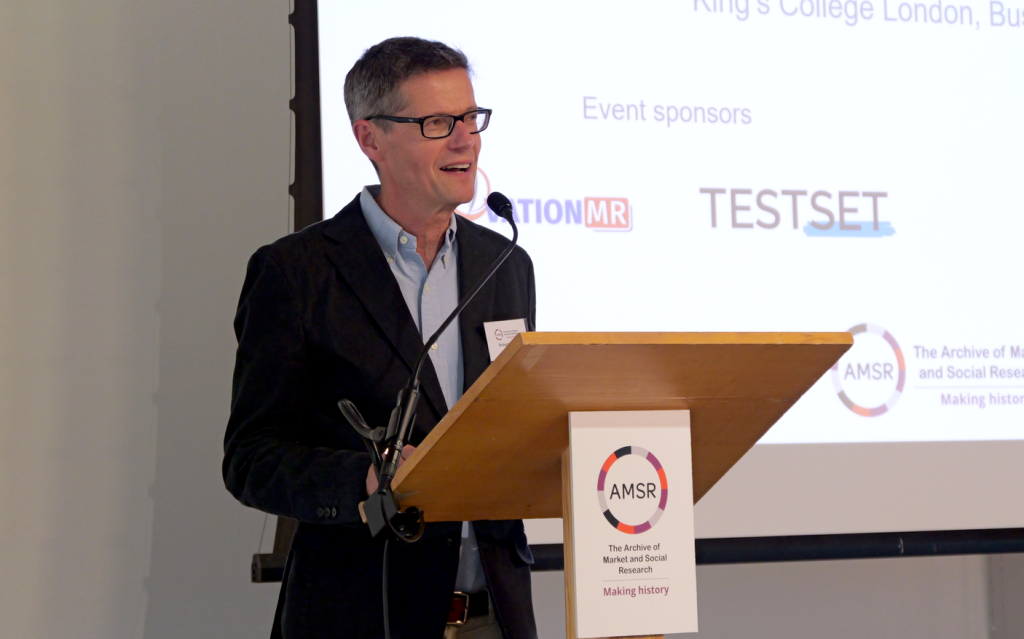
In an era where data is abundant but historical perspective is often overlooked, the work of preserving and learning from past research has never been more valuable. As CEO of AMSR, Richard Asquith brings decades of global experience in market and audience measurement to a mission focused on safeguarding the industry’s legacy while shaping its future. In this interview, he reflects on his career journey, the growing importance of the Archive of Market and Social Research, and why understanding the past remains essential for the next generation of researchers.
Richard, how did your career journey find you leading AMSR?
My career journey started way back in the 1980s when I joined a research supplier called RSGB as a graduate trainee and learned the tools of the trade, at least as they were back then! I gained a thorough grounding in research theory and methodology, developed my skills in handling clients and progressed to become a Director of the company. That firm foundation gave me great confidence as my career developed.
After that I joined Kantar. I led the TGI Consumer-Media Study and was made Managing Director of BMRB International in 2004. From 2012-2017 I was Global CEO of Kantar’s TV and Video audience measurement business which at the time operated in 40 countries and employed over 800 staff. Leading a global research business was a fascinating challenge as the international organisation looked to the UK HQ for direction on methodology, technology, client strategy and commercial policies which had to be delivered whilst respecting differences in cultures, skills, resources, capabilities and client environments.
For the past five years I have worked independently and was looking to do some volunteering alongside my consulting which, ideally, used my skills and experience. I joined AMSR which stands for the Archive of Market and Social Research firstly as a volunteer, following conversations with Debrah Harding at MRS and the then AMSR CEO Adam Phillips. I became a Trustee of the charity in 2024 and was honoured to be asked to succeed Adam as CEO, taking over in April 2025.
Tell us more about AMSR?
AMSR was set up about 10 years ago and the original prompt was a desire to preserve market research reports and associated material. The fear was that, as practitioners died and companies were taken over, significant pieces of research would be lost or destroyed and this is material that told the story of how market research has developed in the UK and has acquired enormous influence on business and society. The MRS recently released a study showing that the research and evidence market generates nearly £19bn of gross value added to the UK economy each year, which makes it larger than the entire publishing sector and over twice the UK’s music industry sector. So this is an industry which deserves to have its history documented.
But it very quickly became apparent that the documents being preserved have a value way beyond that initial idea. AMSR is also a unique resource for education and academic research, for training, for understanding society and consumer trends as well as demonstrating the role that market research plays and celebrating the impact that its made and continues to make.
There are now over 11,000 documents in the Archive. These are mainly research reports covering a wide range of topics including consumer goods and services, media, politics and society, together with documents covering the history of the development of market research and the ideas and techniques that it uses. The earliest report dates from 1925, actually on Pears soap and washing habits, but the bulk come from the 1970s to the 2000s.
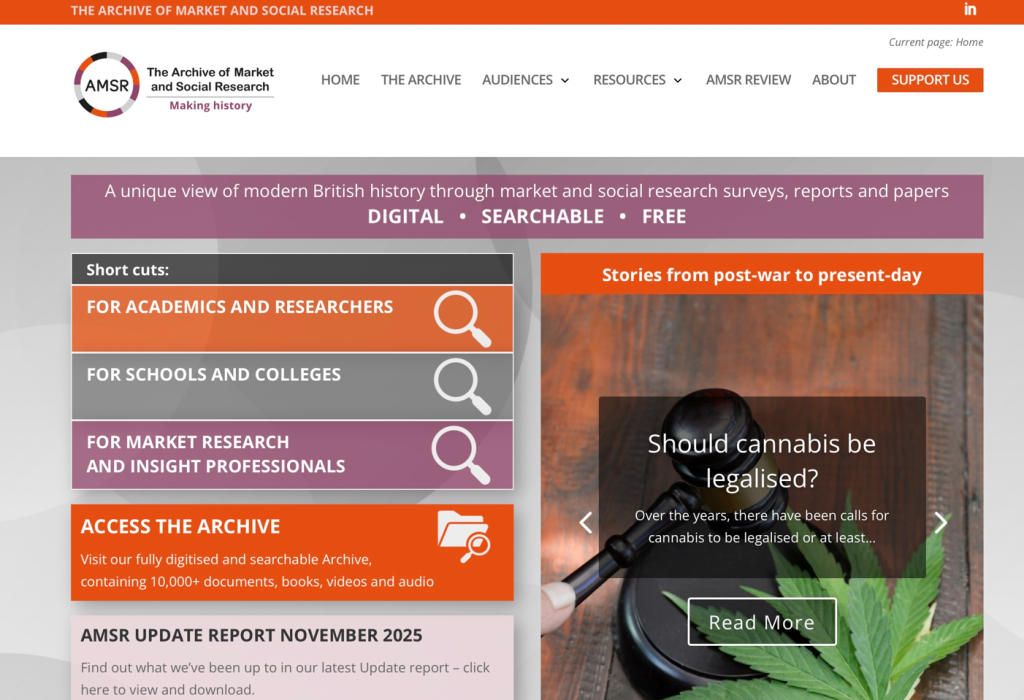
It was decided at the outset to digitise the material, index and catalogue it all so that it’s searchable and then make it available online free of charge to users via the Archive’s website. We are already seeing over 3,000 visits to the online Archive each month and this number is steadily growing.
Why do you think that the work the Archive is doing is important?
For researchers, the Archive is a resource which can be used to add consumer, social and political context to proposals and trend data to reports.
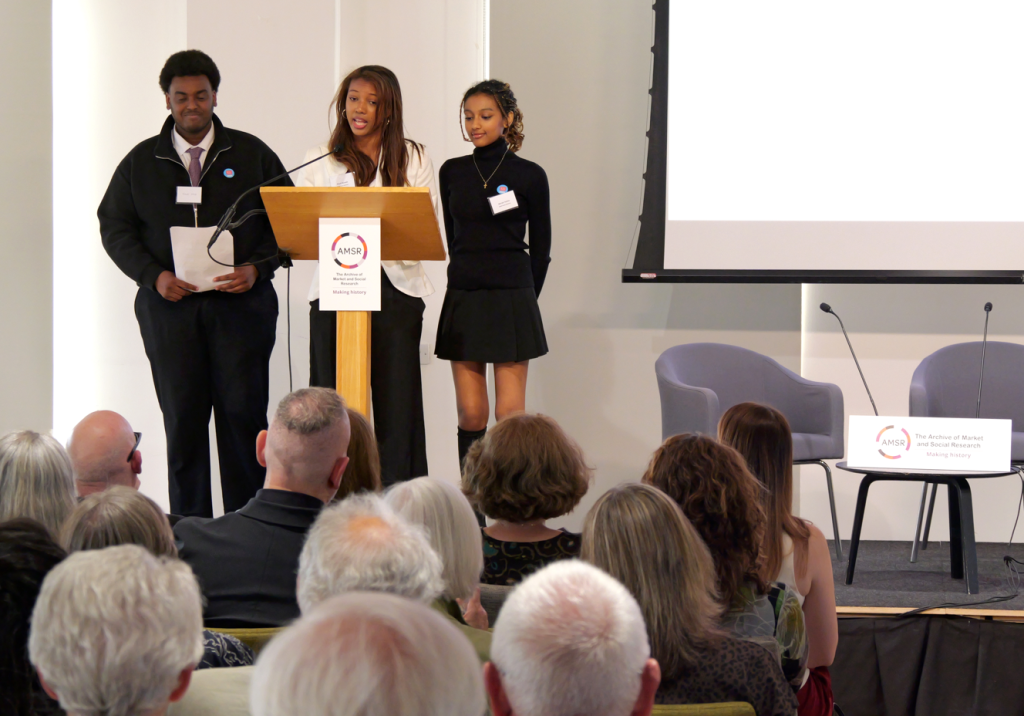
Academics quickly realised the value of the Archive for their research and also began using it with their students. In the past year, AMSR has started working closely with schools examination boards such as Cambridge OCR and Pearson who are now promoting the Archive as a resource to support A-level Modern British History, Politics, Sociology, Media Studies and EPQs. So the Archive is demonstrating the value of high quality market research to what we hope will be the next generation of market researchers.
Consequently, the Archive is an ESG win for the research industry. Not so much environmental, but on the social side, it protects and makes freely available decades of evidence on how people in the UK live, work, vote and consume. And in an age of increasing mis and dis-information and the re-writing of history, the Archive shows what real people really thought and did. From a governance perspective, support for the Archive signals that you and the company you work for treat data and evidence as a public good, not just a disposable input to projects.
What do you need from the industry to support your objectives?
In short content, money and expertise.
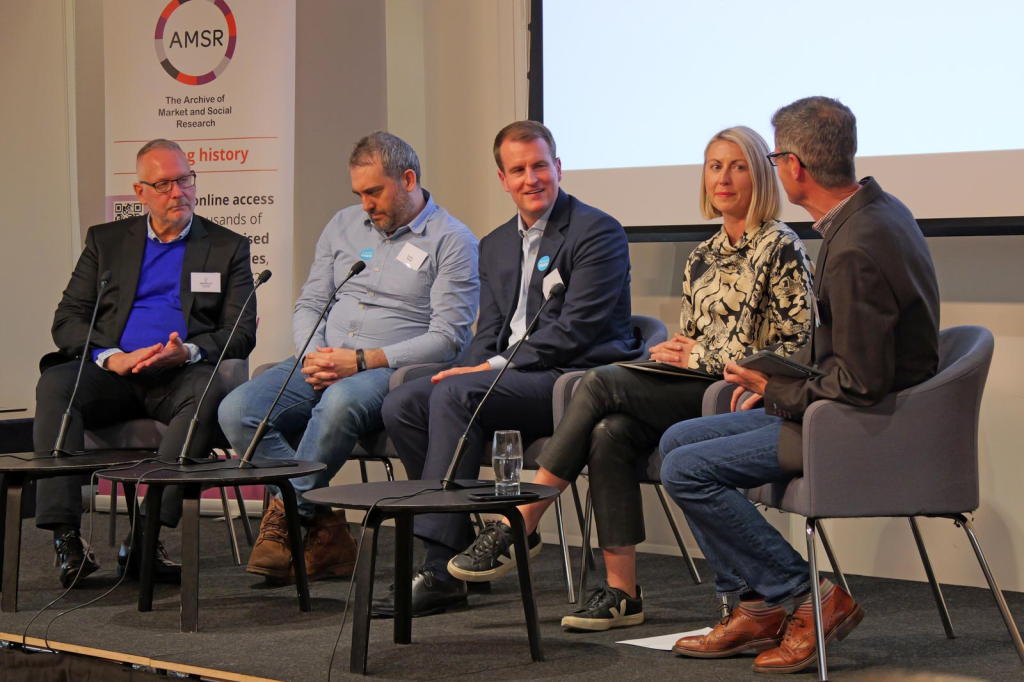
We are always on the lookout for high quality research material right up to the present day which can be archived and made available to users. That includes data, polls, reports, presentations and white papers from all areas of the industry.
AMSR is a registered charity, staffed by over 50 volunteers, but to function and develop we need to buy in services such as web design and hosting, storage for the large number of original documents which we have to retain and marketing materials. To date it has been funded entirely by donations from companies and individuals and by selling sponsorships. AMSR co-operates with the MRS, and Jane Frost is a Trustee, but the Archive is independent from the MRS and doesn’t receive any financial support from it.
And, last but not least, we need people who are interested in what we are doing to volunteer. It’s a great way to get exposure to research in all its forms while giving back to the industry and, I would argue, to society generally. There are all sorts of opportunities to get involved. Supporting academic and other users who are not necessarily experienced in using research data, writing articles based on archive content, using social media to promote the archive and working on more technical challenges that we have such as analysing web traffic data and experimenting with applying AI to archive content.
Do you have any advice for junior researchers?
All the obvious things. Be inquisitive, be open-minded, have a point of view. And in an AMSR context, learn from the past. Obviously, research techniques are changing massively, but the fundamentals of good research remain. Be aware of possible bias from the way that the information is gathered and anchor your findings and recommendations on sources of truth.
And in your career, always be flexible and open to change. It is unrealistic to plot out a future career path when the speed of change is dizzying, but there will always be demand for people who are creative thinkers, who are comfortable with ambiguity, who display emotional intelligence and who apply logic to solve problems.