Fast research, real confidence and the data quality question
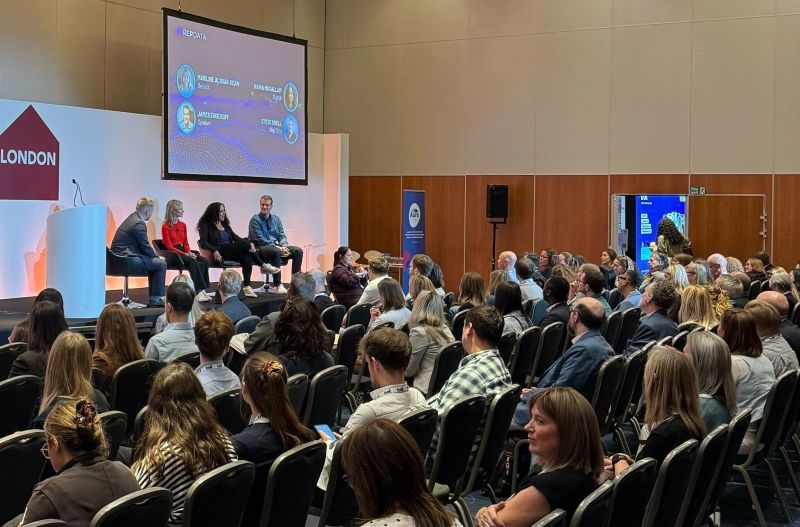
When Steve Snell stepped onto the Quirk’s London stage to moderate a panel on speed and confidence in research, the conversation could easily have become another debate about AI and faster delivery. Instead, it became something more useful.
With four parts of the research ecosystem represented, the client, the agency, the technology platform and the sample and data quality world, the discussion focused on whether faster research leads to better decisions and how teams maintain confidence in their data. As Head of Research at Rep Data, Steve works across technology, AI, data quality, sample integrity and the growing pressure on insight teams to move at the pace of the business. Following the panel, Significant Insights caught up with him to reflect on the discussion and the issues shaping research today.
Steve, you moderated a panel that brought together the client, agency, technology and data quality perspectives. What did that mix reveal?
I was pleasantly surprised by the consensus across the experts. Everyone wants speed. Clients need to move faster to stay relevant in their organizations, agencies want to free their teams from production-heavy work so they can spend more time thinking, and tech platforms are making more of the process faster and more accessible. From a data quality perspective, we’re focused on making sure speed doesn’t come at the expense of trust.
Everyone was talking about the same challenge but through their own lens. For clients, speed is about relevance. For agencies, it’s about efficiency, interpretation and delivering insights with impact alongside their clients. For tech platforms, it’s about scale and usability. For sample and data quality teams, it’s about making sure the foundations still hold.
What we are dealing with is not a one-dimensional issue.
It felt like the conversation wasn’t anti-speed. It was more about what speed can quietly push out of the process.
Exactly. Speed has done a lot of good for research. There are parts of the process that should be faster. Nobody wants researchers spending unnecessary hours on admin, scripting, manual cleaning or repetitive charting if technology can help… but the risk is that speed starts to compress the parts of research that require judgment.
The brief, the business question, the sample design, the interpretation, the story and ultimately the “so what?” all matter. They’re the parts of the process where researchers are making decisions and applying experience and judgment. Those decisions are what shape the outcome.
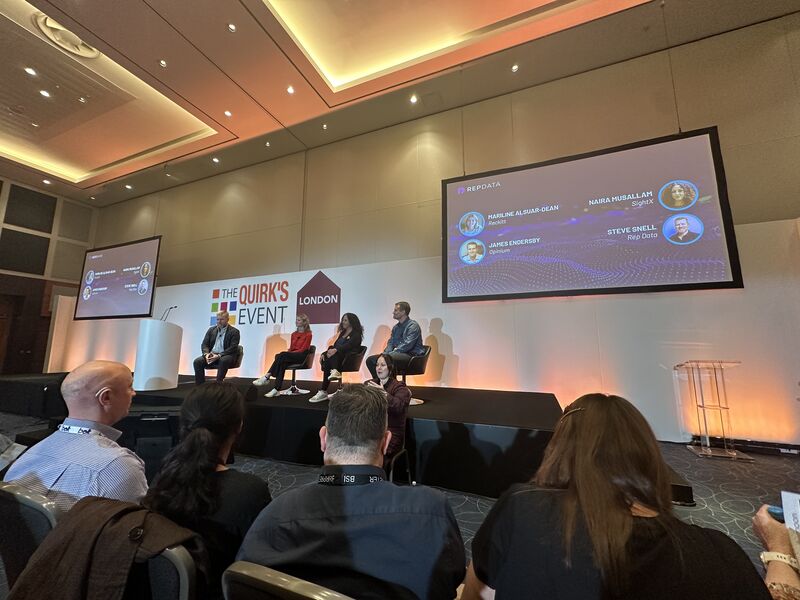
Mariline from Reckitt spoke from the client side about needing speed to stay relevant, especially in disrupted categories. Did that resonate?
Completely. From a client perspective, speed is a necessity. Consumer behaviour, culture and competitors all move quickly, so the business cannot always wait for a perfect research process.
Mariline also made an important point about what can get lost when everything moves too quickly. You can miss nuance, emotional depth and the unexpected data points that challenge assumptions.
If research only confirms what the business already thinks, it’s probably not doing enough.
James Endersby from Opinium made the point that the danger is not slow research, but running the wrong study quickly. Is that where confidence starts to break?
Yes, and I thought James framed that really well. A fast study can be incredibly valuable if it is answering the right question with the right method. But if the question is poorly framed, or the wrong audience is recruited, or the interpretation is rushed, then speed simply gets you to a weak answer faster. That is where false confidence creeps in. The output may look polished, with clean charts, dashboards and strong scores, but confidence comes from the quality of the work behind those outputs.
From your world, how much of this comes back to data quality?
In a sense, it all comes back to data quality. We can’t just check for quality at the end of a study, it has to be built into the process from the beginning. We see our industry facing increasingly sophisticated fraud, poor quality respondents, bots and bad actors who are getting better at looking legitimate. That is why sample quality and fraud detection are now central to the speed versus confidence debate.
If the underlying data is compromised, those issues follow the research all the way through. The dashboard may look good, the fieldwork may move quickly and the AI summary may read well, but the outcome is still shaped by the quality of the data underneath it.
Basically, bad inputs still create bad decisions.
One attendee reflected that “a trusted partner is key.” Did that come through strongly?
Yes, it was a strong theme. In a high-speed environment, trust becomes more important, not less. When timelines are compressed, clients need to know their partners are not just moving quickly, but making the right calls. Agencies need technology partners they can rely on. Platforms need quality systems that are robust. And sample providers need to be transparent about how they protect data integrity.
We all should know that the more automated the process becomes, the more important trusted human judgment becomes around it.
Naira raised the question of whether technology is pushing us toward smarter decisions or just faster, more confident mistakes. How would you answer that?
It can do either. Technology is not inherently good or bad for confidence. It really depends how it is used. Used well, technology can improve confidence dramatically. It can detect fraud, spot anomalies, manage quotas in real time, improve consistency, support synthesis and help researchers see patterns faster. Used badly, it can make weak work look stronger than it is.
AI and automation can create fluency, speed, a sense of authority… But that does not always mean the work is right.
There was also a clear warning on the panel about not getting lazy with AI.
Yes, and I think that is one of the biggest themes for the industry. AI needs supervision, training, context and human challenge. We cannot treat it as a magic layer that fixes poor research design or poor data quality. If anything, it makes the foundations more important because it can amplify whatever you feed into it.
If the inputs are poor, AI will still produce outputs that look convincing. That’s the problem. It will gloss over bad design and data quality, so we have to remain vigilant in what is going into AI.
Where do you think the human role is most important now?
I thought James put it well. Humans are essential at the points where meaning is created. Humans need to frame the problem. Humans need to decide whether the data is credible. Humans need to interpret nuance. Humans need to understand the politics of decision-making inside organisations. Humans need to turn findings into action.
AI can help process information, support analysis and accelerate workflows, but there is still an important role for human judgment in understanding what a business is trying to decide, what level of risk it is comfortable with, how findings can be turned into action.
Mariline made a sharp point that if stakeholders are happy with “directional” data, sometimes it means the data was not really needed in the first place. What did you make of that?
I generally agree. Directional research has a place and not every decision requires maximum precision. But we should be honest about our purpose in conducting research. If the business is making a low-risk call, directional confidence may be fine. If the business is making a major investment decision, then the standard needs to be much higher. You have to match the method to the risk.
What did the panel suggest about “more data”?
More research doesn’t mean better research. You can run more studies, generate more simulations, whatever, but research quality trumps research quantity. The discussion kept coming back to the importance of better evidence, cleaner data, sharper questions and clearer interpretation. Those are the things that help researchers make better decisions.
If you had to name the biggest blind spot in the industry right now, what would it be?
Assuming that faster research automatically means better research. Speed is valuable, but only if it preserves or improves confidence. The real goal should not be faster outputs! It should be better decisions with less wasted time, less wasted budget and less avoidable risk.
Finally, what are your key takeaways for the sector right now?
First, speed is here to stay, so the industry needs to design for it rather than complain about it.
Second, data quality has to move upstream. It cannot be an end-of-process clean-up exercise.
Third, AI needs human supervision. The industry cannot afford to get lazy.
Fourth, more data is not always better. Better evidence is better.
And finally, every part of the ecosystem has a role to play. Clients need to ask better business questions. Agencies need to protect framing, interpretation and storytelling. Tech platforms need to build for confidence, not just speed. And sample and data quality partners need to keep raising the bar on trust.
Those themes from the panel were pretty consistent, despite the different perspectives represented on stage. That is how research moves faster without losing what makes it valuable.