Aura Rising Talent Q&A: Amy Nicholson
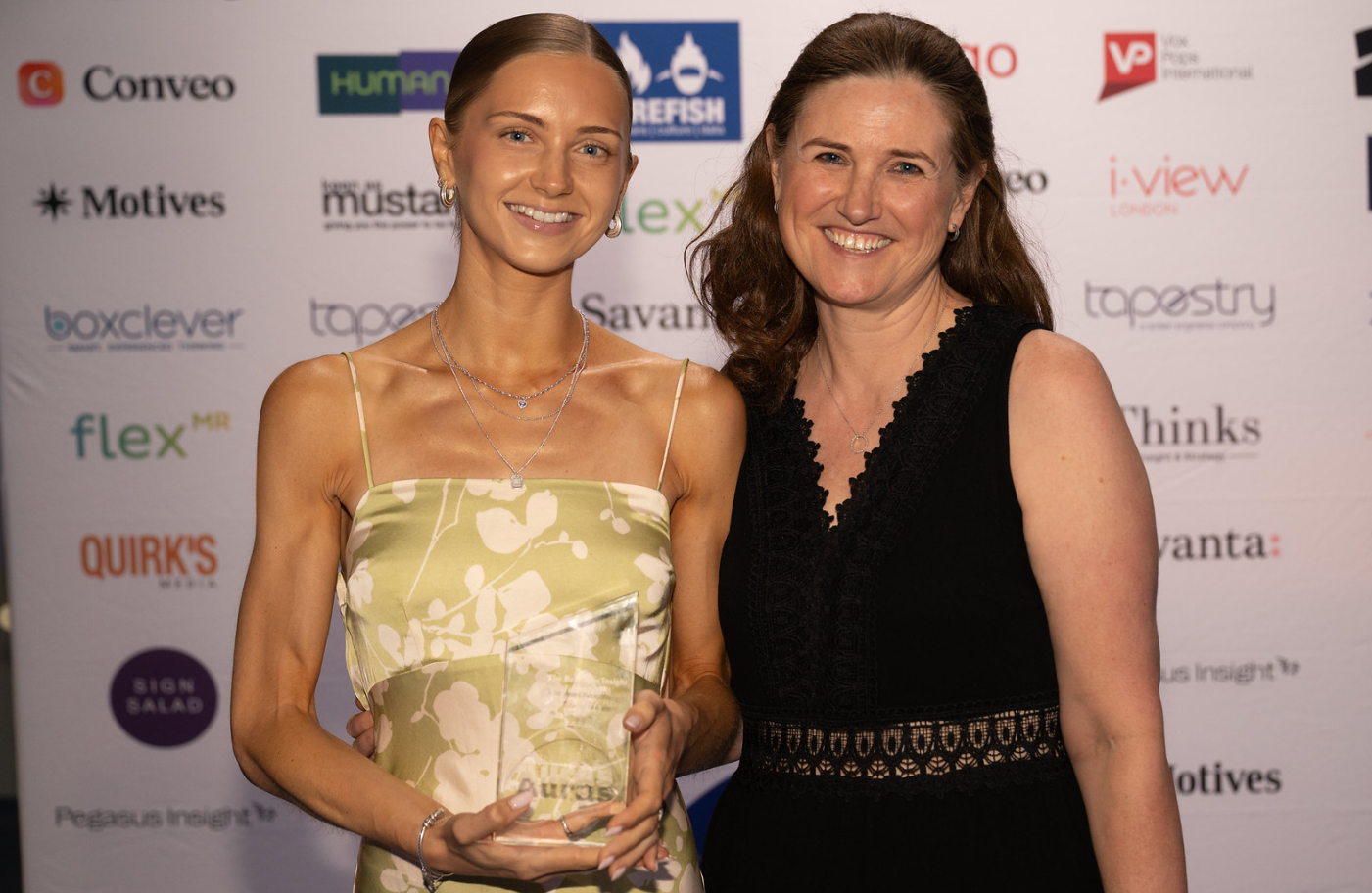
The future of insight will be shaped by the people coming through it. In our new series with Aura, columnist, Zoe Fenn, meets some of the brightest next-generation client-side insight talent to explore their journeys, the lessons they’re learning and the leaders they hope to become.
We start with Amy Nicholson from BT, whose story is one of curiosity, resilience and learning to trust your own voice.
Amy Nicholson has only been in BT’s insight team for just over a year, but her Aura Rising Talent nomination reflects something that has clearly been building for longer: curiosity, resilience, and a growing confidence in the value she brings.
When we spoke, Amy was quick to credit the people around her. But as the conversation went on, another story emerged too: one about learning to trust herself, finding the right fit, and realising that confidence often comes after you have already done the hard thing.
Congratulations on your Aura Rising Talent nomination. How did it feel to be recognised?
It felt really lovely, and very kind. I’ve only been at BT for just over a year, so the fact that the team went out of their way to nominate me means a lot. It’s such a supportive team. Everyone has been so generous with their time, experience and trust, and I don’t take that for granted.
When I asked what you put your success down to, you started by talking about other people. Who has helped shape your career so far?
The people around me have been hugely important.
Earlier in my career, I had a mentor outside my organisation who helped me have really open, candid conversations about where I wanted to go. She could see parts of me that I perhaps wasn’t clear on yet, and helped me work out not just where my strengths were, but what gave me energy.
I also worked with a senior leader who was very different to me. Personally, socially, in the way she navigated the world, she had qualities I felt I lacked. But she took time to build me up, give me honest advice and develop my confidence. That relationship was pivotal.
And what do you think those people saw in you?
Probably a willingness to be curious and get stuck in. I’ve always wanted to take opportunities rather than shy away from them. But I also think it’s important to be honest about where you need help. I don’t want to over-promise and under-deliver. I’d rather be clear and say, “This is the bit I feel confident in, and this is where I might need a hand.” Often the help is there. You just have to ask for it.
You mentioned confidence a few times. What has helped you build it?
Being thrown in at the deep end!
I spent two years in an agency strategy role where I had to figure things out quickly, write briefs, present ideas to senior clients and handle situations I didn’t feel ready for at the time. If someone had asked me then whether I felt confident, the answer would have been no. But there wasn’t really a choice.
Looking back, that experience taught me that I could cope. I could walk into a room, present an idea to senior clients, handle challenge and make it work. Things that used to feel really scary now feel like part of the routine.
Is there an idea that guides how you approach insight work?
Have a point of view, but don’t hold on to it too tightly: be open to the first hypotheses not being the right one.
In insight, our job isn’t just to report data back. The value comes from making sense of it, spotting patterns and helping stakeholders make better decisions. But you also have to stay open to being challenged by the evidence.
The best insights often come from the places where the data surprises you, or where one audience behaves completely differently to another. You need the confidence to say, “This is what I think is happening,” but also the humility to keep questioning your own assumptions.
What advice would you give to someone earlier in their career?
Don’t rush to define yourself too narrowly, too early.
I did a Geography degree and then started on a marketing graduate scheme, which is such a broad field, then worked in strategy for an experiential marketing agency. I would sometimes look at friends who were on a clear career trajectory and worry that I hadn’t got that. But for me, arriving at a career in insight became clearer by trying different things and paying attention to what I naturally gravitated towards.
Notice what gives you energy. Notice what problems you like solving. Notice what people keep coming to you for. Those clues can be more useful than forcing a five-year plan before you’re ready.
What are you excited about next?
Insight feels like a really exciting place to be. Human behaviour is becoming more fluid, contextual and harder to predict, so we need to understand not just what people think, but what shapes decisions in real moments.
That means bringing together data, behaviour, culture and the human side of decision-making. For someone building a career in insight, being part of that shift feels exciting.
And what are you still figuring out?
Leadership. I’ve been lucky to be surrounded by different leadership styles, and now it’s about working out what kind of leader I want to become. I know I’ve got a lot to figure out, but I’m open to learning and will keep on being a sponge.