30Under30 Nominee: Rupinder Singh
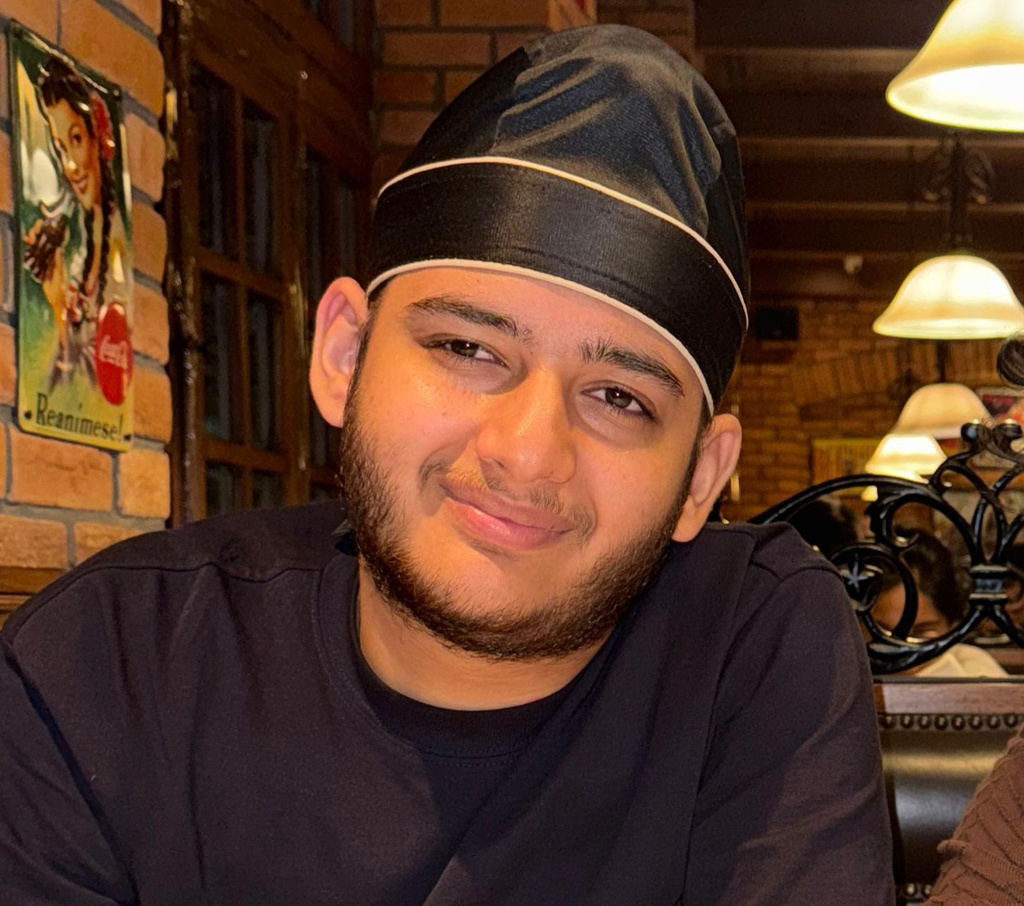
Great to hear from Global 30 Under 30 Nominee, Rupinder Singh, a Trainee at Quantitative Research at Sago, based in Delhi, India. Alongside this, Rupinder is pursuing a BA (Hons.) in Economics at Hansraj College, University of Delhi. Rupinder’s work sits at the intersection of research, data and human behaviour. Rupinder spends a lot of time trying to understand not just what people say, but what the numbers reveal about why they say it.
How did you find your way into research, data and insights?
It was not a carefully planned career path. In fact, when I started studying economics, I thought I was signing up mainly to understand markets, policies and equations. Somewhere along the way, I became much more interested in the questions behind the numbers. Why do people behave differently even when they have the same information? Why does a statistic move the way it does? And, perhaps most importantly, what is the story that the number is trying to tell?
That curiosity gradually pulled me towards research. Through college projects, my work with the Economics Society and research initiatives, and eventually my role at Sago, I got to experience research beyond textbooks. Collecting information, working with quantitative data, dealing with imperfect responses and learning how easily numbers can lose their meaning if you forget the people behind them.
What started as academic curiosity has become something much more personal. I like research because it gives me an excuse to remain curious. There is always another question hiding behind the answer.
What part of your work are you most proud of and why?
I’m most proud of how quickly I learned to become comfortable with the uncomfortable parts of research.
One of the most valuable experiences in my current role has been working directly with respondents across different markets. It sounds straightforward until you actually do it. People do not behave like neat rows in a dataset. Some change their minds, some misunderstand a question, some refuse to participate and sometimes the most interesting insight comes from a response that initially looks like noise.
Working through those realities taught me something that no textbook could: good quantitative research is not just about getting a large number of responses. It is about understanding the quality, context and human behaviour behind those responses.
I’m proud that I have gone from being a student learning research concepts in a classroom to being someone who can contribute to a live research process where the quality of the work ultimately depends on decisions made from that data.
For me, that transition, from studying research to actually being responsible for part of it, has been the most meaningful achievement so far.
What have you learned so far that you wish you’d known when you started your career?
I wish I had understood earlier that you do not need to have your entire career figured out at 20.
There is an enormous pressure on young people to have a five-year plan, a perfect CV and a clear answer to “What do you want to do?” I used to think uncertainty meant I was behind. I now think uncertainty is often where the most useful learning happens.
Every opportunity I have taken, including the ones that initially felt outside my comfort zone, has taught me something about the kind of work I enjoy and the kind of professional I want to become.
I’ve also learned that being the person who asks a “stupid” question is often more valuable than being the person who pretends to understand everything. Research, especially, rewards curiosity over ego.
The biggest lesson has been simple: do not optimise your early career for looking impressive. Optimise it for becoming useful. Skills, confidence and recognition tend to follow.
What excites you most about the future of insights and what would you like to help change?
What excites me most is that the boundary between data, technology and human understanding is disappearing.
AI can process information at a scale that humans simply cannot. But I don’t think the future of insights belongs to whoever can produce the most data or the fastest dashboard. It belongs to people who can ask better questions and understand what the data cannot tell them.
I would like to see insights become less of a final stage function and more of a decision-making discipline, something that influences a question before a project begins, rather than simply explaining the answer afterwards.
I also think our generation has an opportunity to make research more human. As technology makes data collection and analysis faster, we should not lose sight of the fact that every data point represents a person, a decision, a belief or an experience.
The future I want to contribute to is one where technology makes research more powerful without making it less human.
What advice would you give to someone just starting out in the industry?
Be curious enough to look stupid.
Ask why. Ask again. Ask what happens if the assumption is wrong. Volunteer for the task nobody else wants because that is often where you learn how the machine actually works.
I would also tell them not to become obsessed with titles too early. Your first few years are less about building a perfect professional identity and more about collecting experiences that teach you what you are good at, what you care about and what you still need to learn.
Learn the technical side of the industry but learn people too. Learn how to communicate a complicated finding to someone who has five minutes. Learn how to listen to a respondent. Learn how to disagree without becoming defensive.
And worry less about being the smartest person in the room. Try to be the person who leaves the room having learned something.
Who has helped you along the way?
There are several people I would find difficult to separate from my journey so far.
At Hansraj College, Professors Animesh Naskar, Alka Kacker and Madhavi Moni have each influenced the way I approach economics and learning. They encouraged me to question assumptions, look beyond the obvious answer and develop my own way of thinking. Those lessons have stayed with me well beyond the classroom.
Professionally, I am particularly grateful to Vinod Gupta, SVP, Quantitative Research at Sago. Being early in my career, having someone senior trust me with meaningful work has meant a great deal to me. It gave me the confidence to move from being someone who was learning about research to someone who could actually contribute to it.
And then there is my mother. She has probably shaped my understanding of perseverance more than anyone else. Watching her build her own career while continuing to show up for our family taught me that ambition and responsibility do not have to compete with each other. A lot of the confidence I carry into unfamiliar rooms comes from knowing that I have seen someone close to me keep going, even when things were not easy.
I have been fortunate to have people who saw potential in me before I had the experience to prove it. I hope that, as I grow, I can do the same for someone else.